

Bergère chair: what it is, how to recognise it and how to style it in a modern home
The bergère chair is the armchair with a tall, enveloping back, a deep seat and closed sides, born in 18th-century France. Today it comes in modern versions that are slimmer and less ornate: here is how to recognise one, how much space it takes and where to put it at home.
A bergère chair (also called a bergère armchair) is an upholstered armchair with closed sides: a full padded panel sits between the arms and the seat, and the seat cushion is soft and deep. People often search for it without the accent, as “bergere chair”. It was born in 18th-century France to offer more comfort than the formal seats of the time, and today it is reinterpreted with cleaner lines.
In short
- A bergère has closed sides filled with padding; the fauteuil, the older French armchair, has open sides.
- The Metropolitan Museum links it to the start of Louis XV’s reign; other sources place it around the middle of the 18th century.
- In modern versions the back stays tall, the seat gets wider and the arms and wings become less showy.
- There is no standard size: for the models cited here, width runs from 73 to 95 cm and height from 97 to 108 cm.
- It suits a living room, a bedroom or a reading corner; some models are designed for outdoor use.
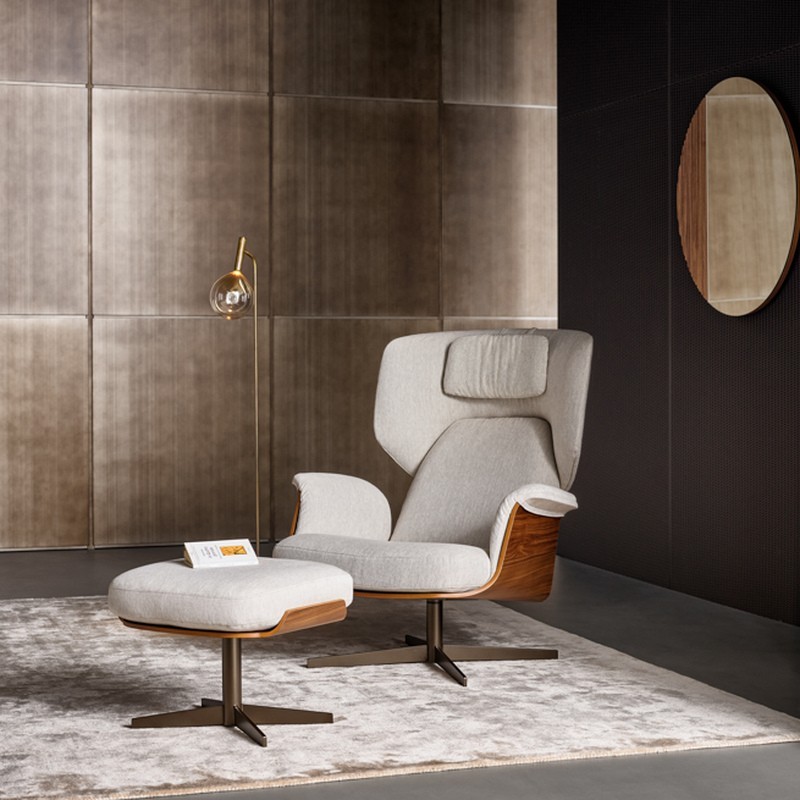
What is a bergère chair and where does it come from?
The Metropolitan Museum of Art in New York describes the bergère as an armchair upholstered between the arms and the seat, introduced at the start of Louis XV’s reign as a more comfortable seat, at a time when furniture was becoming less formal. Sources disagree on the date: the terminology dictionary of Québec’s Office québécois de la langue française places the appearance of this large, rather low fauteuil around the middle of the 18th century. That is why it is safer to say “18th-century France” than to give a precise year.
The name means “shepherdess” in French. On period models the arms were set back from the front corner of the seat to make room for the wide panier skirts of the day, and the decoration on the back of the frame suggests the chair was meant to stand in the middle of a room, not only against a wall.
How do you recognise a bergère chair?
Three things set it apart from an ordinary armchair: the sides, the shape of the back and the type of padding.
Closed sides
This is the deciding trait. The fauteuil has open sides, meaning an empty space under the arm; the bergère closes it with an upholstered panel, which is why it feels more enclosed and cosy.
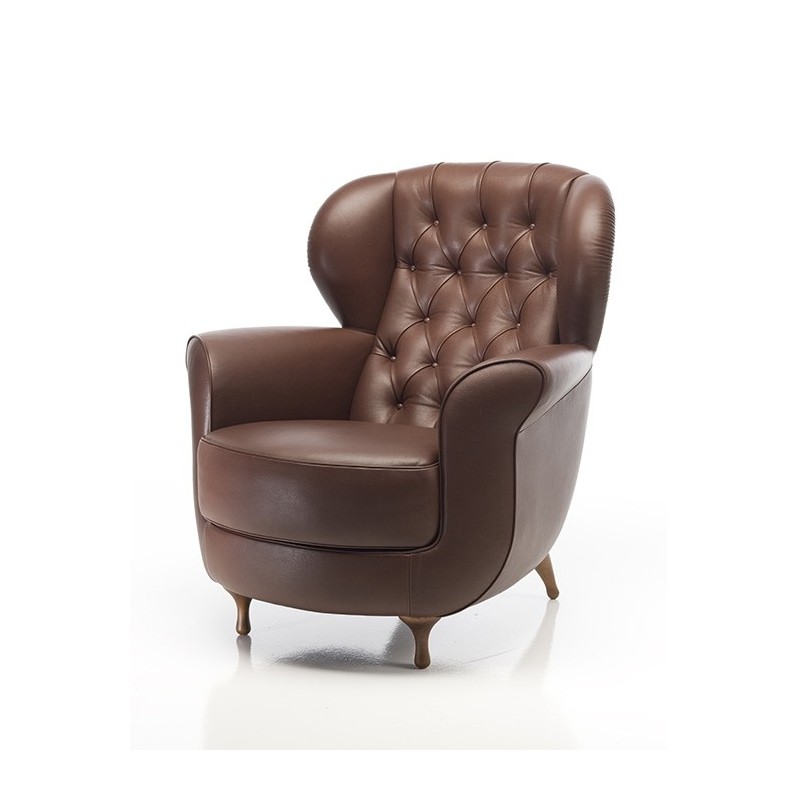
Tall back and deep seat
On the classic model the back is tall and padded, and the arms join the back in one continuous line. In modern versions the back stays tall, the seat gets wider and the arms shrink. The seat cushion is usually loose and thickly padded.
Frame and upholstery
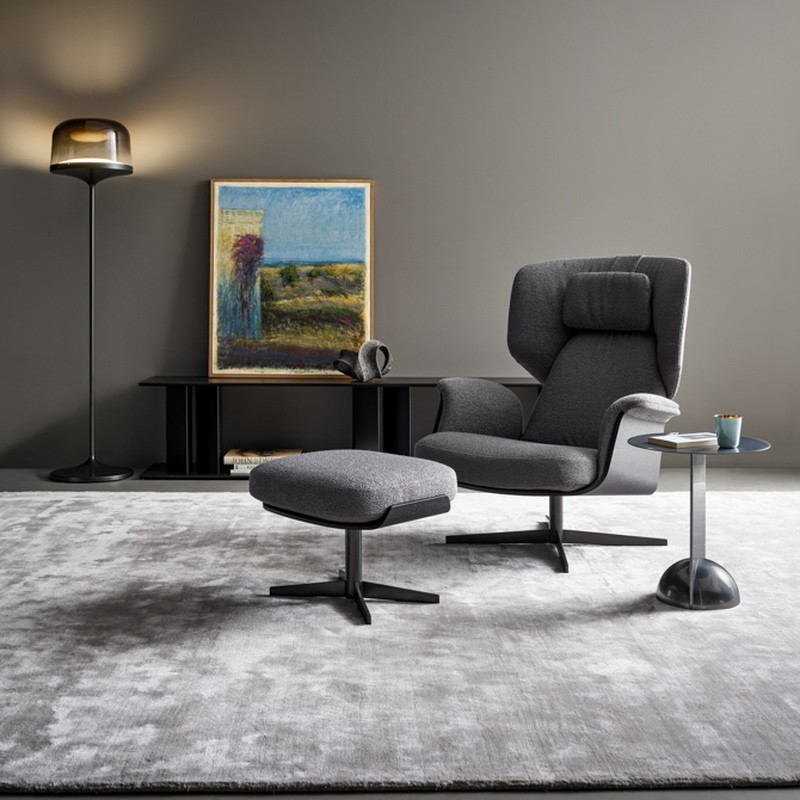
Period models have an exposed wooden frame, often carved or gilded. Contemporary versions play with different materials and shapes. The Papy Bergère by Moroso, designed by Massimo Iosa Ghini, has an internal wooden frame, padding in differentiated-density polyurethane foam and polyester fibre, goose-down back cushions, and fabric or leather upholstery, also in a tufted version. The Olos Bergère by Bonaldo, designed by Mauro Lipparini, swivels and has a shell in curved veneered plywood on a central metal base.
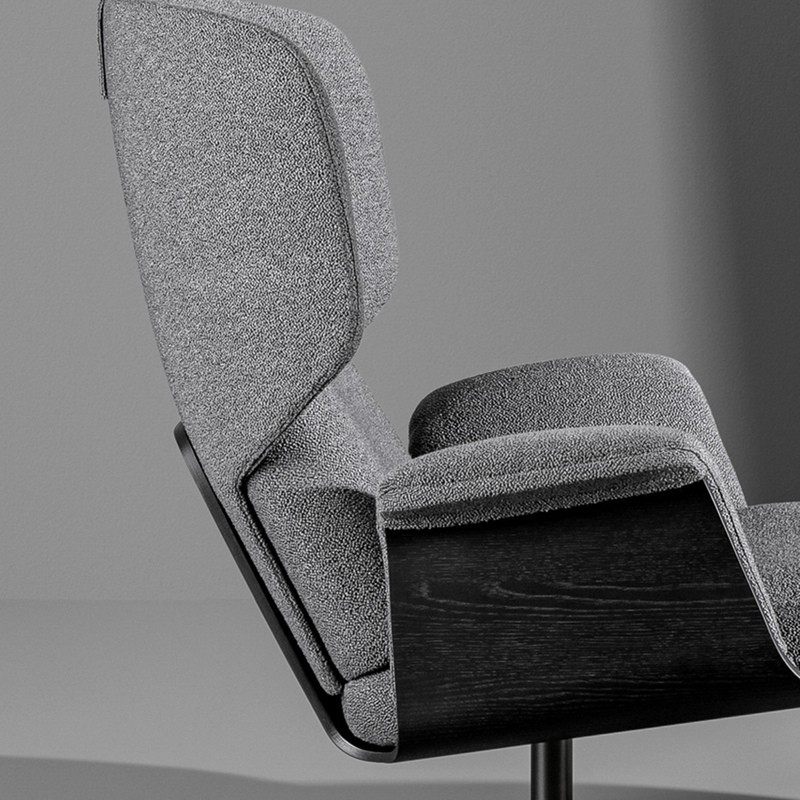
The same model changes character with its upholstery: here is the Papy in three finishes.


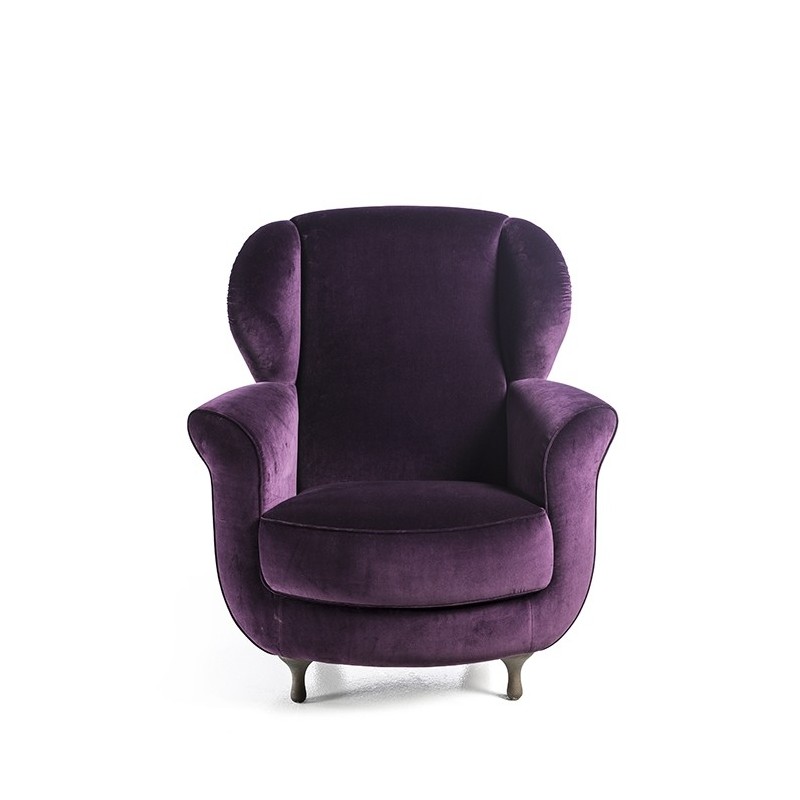
Bergère or wing chair: what is the difference?
They are not two separate families, which is why the comparison causes confusion. Here is how to tell them apart:
- Fauteuil: a French armchair with open sides and an exposed wooden frame; it came before the bergère.
- Bergère: the same elements, but with the sides closed by padding and a deep seat cushion.
- Wing chair: has “wings” attached to the back; the first models appeared in 17th-century England as fireside chairs and shielded the sitter from draughts.
- Bergère with wings (bergère à oreilles): combines closed sides with curved side wings; according to the Italian site arredamento.it, it has always been the most common model.
In shop listings the terms get mixed, so look at the sides under the arms before the name: if they are closed by full padding, the chair belongs to the bergère family.
What size is a bergère chair?
There is no standard size. Medium and large armchairs usually measure between 60 and 95 cm in width, as we explain in our guide to standard armchair dimensions, and the bergères in this guide run from 73 to 95 cm. These are the figures from the product sheets of the models cited here:
| Model | Width | Depth | Height | Seat height |
|---|---|---|---|---|
| Olos Bergère (Bonaldo) | 95 cm | 92 cm | 108 cm | 38 cm |
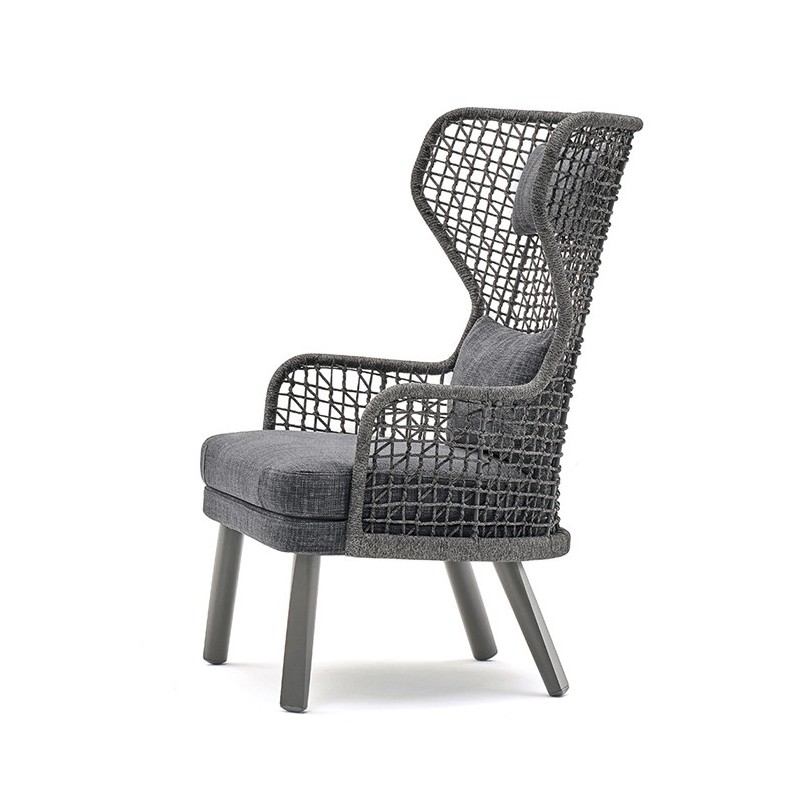
| Emma Bergère (Varaschin, outdoor) | 83 cm | 79 cm | 108 cm | 46 cm |
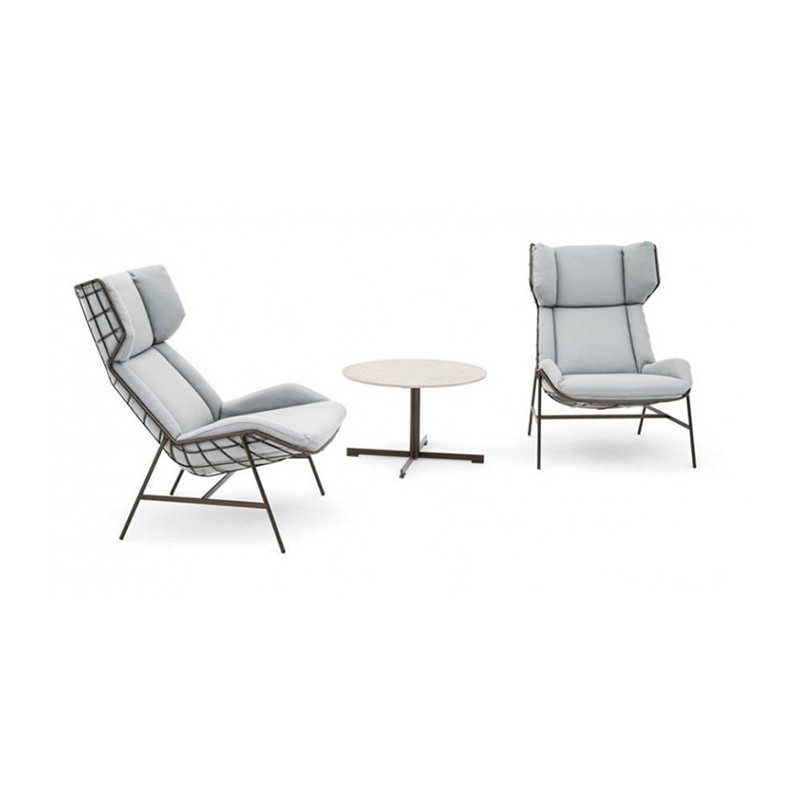
| Summer Set Bergère Relax (Varaschin, outdoor) | 73 cm | 97 cm | 97 cm | 47 cm |
| Classic fabric bergère (example from arredamento.it) | 76 cm | 80 cm | 107 cm | not given |
The Olos Footrest measures 50 x 56 cm and is 42 cm high. Before ordering a bergère that is 95 cm wide, check doors, corridors and stairwells; if space is tight, consider small armchairs, a more compact alternative.
Where should you put a bergère chair at home?
In the living room
This is the most natural spot, especially with a classic style. A showy or colourful bergère creates an effective contrast in a room with sober tones. If the living room is small, start from the layout in how to furnish a small living room with a sofa and table and check that the chair does not take space away from the walkways.
In the bedroom
It works in a free corner, away from the wardrobe doors and the path to the bed. With the footrest it becomes a relaxing spot for reading or for laying out tomorrow’s clothes. If the room is small, see furnishing a small bedroom in a modern style to plan the whole layout.
In a reading corner
The tall back and closed sides make it suitable for long reading sessions. Next to it you need a well-placed light: here is where to put the reading lamp to avoid shadows on the page.
Outdoors too?
Some bergères are designed for the outdoors. The Emma Bergère by Varaschin has aluminium or solid iroko legs and a back with an aluminium frame; the Summer Set Bergère Relax has a steel frame. If the chair is meant for a veranda or a terrace, check on the product sheet that the upholstery is suitable for outdoor use.
How do you match a bergère to your home’s style?
- Classic or vintage style: wooden frame and linen upholstery for an old-fashioned look.
- Modern style: velvet or leather, in colours such as purple, burgundy, grey, honey, beige, red, fuchsia, electric blue or black.
- Design style: slimmer shapes, minimal feet and little decoration.
- Shabby chic and industrial: aged leather, which suits both.
For inspiration, look at famous design armchairs and their upholstery.

How do you clean a bergère chair?
It depends on the upholstery. On leather, dust with a dry, non-abrasive cloth without rubbing; twice a year you can use a cleansing milk to keep it supple. On fabric, vacuuming is enough and Marseille soap handles stains. Alcantara needs a soft-bristle brush and a light touch: it is better to blot than to rub. For other covers, such as velvet, always check the manufacturer’s label before using any product.
Which modern bergère models are worth a look?
If you want a contemporary bergère, start from two opposite approaches: the Olos by Bonaldo, which swivels and pairs with a footrest, and the Papy by Moroso, which keeps the tall back and the classic shape with fabric or leather upholstery. To widen the choice there are the unique armchairs with out-of-the-ordinary shapes.
Which mistakes should you avoid when choosing a bergère?
- Choosing from the photo without checking width and depth: the models cited here range from 73 to 95 cm.
- Mixing up total height and seat height: the sheets range from 38 to 47 cm of seat height, and comfort changes a lot.
- Trusting the name: catalogues use “bergère” for different shapes, so look at the sides.
- Using an indoor model outdoors, or the reverse, without reading the upholstery details.
- Picking delicate upholstery in a home with children or pets, where stains are more likely.
Frequently asked questions
What does bergère mean?
It is a French word meaning “shepherdess” and it names an upholstered armchair with closed sides, born in 18th-century France.
Are a bergère and a wing chair the same thing?
They can overlap. The bergère with wings combines the closed sides of the bergère and the side wings of the wing chair, but there are also bergères without wings.
Does a bergère fit in a small living room?
It depends on the model: among those cited the width runs from 73 to 95 cm, more than a compact armchair. In a small living room choose the narrowest version and measure the walkways before buying.
Before choosing, measure the space, read the seat height and depth on the product sheet and pick the upholstery according to how you will use the chair: that way the bergère stays comfortable and recognisable without weighing down the room.