

A sofa under the window: when the layout works and what to check
Putting a sofa under a window can free an uninterrupted wall for bookshelves or a television. In another living room, the same idea may mean moving cushions whenever you open the window or struggling to draw the curtains. The decision involves more than the length of the available wall.
The arrangement works when the window, its coverings and the heating remain usable, and the sofa does not block everyday routes. Back height and the window’s opening movement are the first checks. Daylight, upholstery and the relationship with other furniture complete the picture.
Under the window or in front of it?
These are two different arrangements. A sofa under the window sits close to the window wall, with its back below or near the sill. A sofa in front of the window may sit further into the room, leaving a usable strip behind it.
Bringing the sofa forward can improve access to the window, but it requires space on both sides of the furniture. It is not automatically a space-saving solution. The gap behind should have a real purpose rather than becoming a narrow slot that is awkward to clean.
Draw both alternatives with the sofa’s full depth. A small change on a photograph may represent a significant part of the room once you add the circulation space.
First, can the window open properly?
Measure the lowest part of the moving window section and compare it with the highest point of the sofa back, including cushions and headrests. The height of the sofa frame alone is not enough.
Move the window through its intended opening range and note where it passes in relation to the furniture. Inward-opening, sliding and tilt-opening windows need different checks. Avoid deciding that the arrangement works simply because nothing touches in one position.
Try reaching the handle with your feet on the floor, without climbing onto the sofa or leaning awkwardly. If opening the window requires moving the furniture or standing on a cushion, a different layout deserves serious consideration.
Three common situations to compare
A high sill and a relatively low back
This can be a promising combination if the opening path stays clear. The sofa may make use of an otherwise difficult wall without covering the glazing. Check cushions, curtains and access to the handle all the same.
Do not choose a lower back solely to make the drawing work. The seat still needs to suit the people who use it. Compare all the sofa dimensions, not just the height that fits beneath the sill.
A low window or an opening that meets the backrest
Try a position to one side instead. Pulling the sofa away from the wall may not solve the problem if its height still interferes with the opening or makes the handle difficult to reach.
A perpendicular wall can leave the window clear and change the way daylight reaches the seating. Draw this alternative with the television and dining table included. It is a room layout decision, not simply a last-minute move for one item.
French doors or access to a balcony
When the opening provides access outdoors, preserve the route as well as the opening itself. Consider the sofa with people seated, an optional footstool in use and the doors open. An empty-room photograph does not show these overlaps.
A chaise pointing towards the doorway can narrow the very spot used most often. A different sofa composition or a separate additional chair may suit the room better.
Curtains need room when open as well as closed
Curtains occupy space across the window and when gathered at the sides. The sofa should not trap their movement or compress the fabric between its back and the wall.
Draw the curtains as you would during the day. Check whether they reach the floor, overlap the arms or leave their controls difficult to reach. A roller blind or another covering may change the arrangement, but it must suit the window and the daylight you want.
The furniture should not become an improvised support or restraint for the curtains. Each element needs to work without relying on an accidental fit against another.
What if there is a radiator beneath the window?
A radiator introduces a separate set of requirements. The sofa should not obstruct controls, maintenance access or the intended operation of the heating system. Its upholstery and structure also need to be suitable for the proposed position near a heat source.
There is no single clearance that applies to every sofa and radiator combination. Consult the relevant manufacturers’ instructions and, where necessary, the professional responsible for the heating. Moving the sofa in front first and choosing a gap by eye afterwards is not a reliable planning method.
Daylight, television reflections and upholstery
If the sofa faces a television, observe how the window reflects on its screen at the times you usually watch. Morning conditions can differ from the afternoon. Curtains that exist but are difficult to operate may not solve the problem in practice.
For reading, light from the side can be easier to manage than light directly behind you or in your eyes. Sit at the intended main seat and consider the evening lighting as well as daylight.
Check the upholstery instructions for light exposure and care. Do not assume that a dark shade or a particular fabric type makes sunlight irrelevant. Choose the material with its actual position in mind.
When another wall is the better answer
If the window becomes awkward to open, the curtains stay trapped or the radiator creates substantial compromises, reconsider the position. Keeping the window wall empty may offer more practical value than squeezing a sofa onto it.
A perpendicular arrangement, or a sofa brought forward with a genuinely usable area behind, can preserve the room’s functions. Compare the alternatives as complete plans, including the route into the room, the view from the seat and the furniture used alongside it.
Make the decision through everyday movements
- Open the window and reach the handle from the floor.
- Draw and gather the curtains without moving cushions.
- Check heating controls and the required access.
- Walk towards the balcony with the seating occupied.
- Look for screen reflections at your usual viewing times.
- Allow for cleaning behind the sofa and around the window.
A sofa beneath a window can be a thoughtful use of space, but it should make the room easier to live in rather than add a sequence of small inconveniences. If the everyday checks work, the position has earned its place.
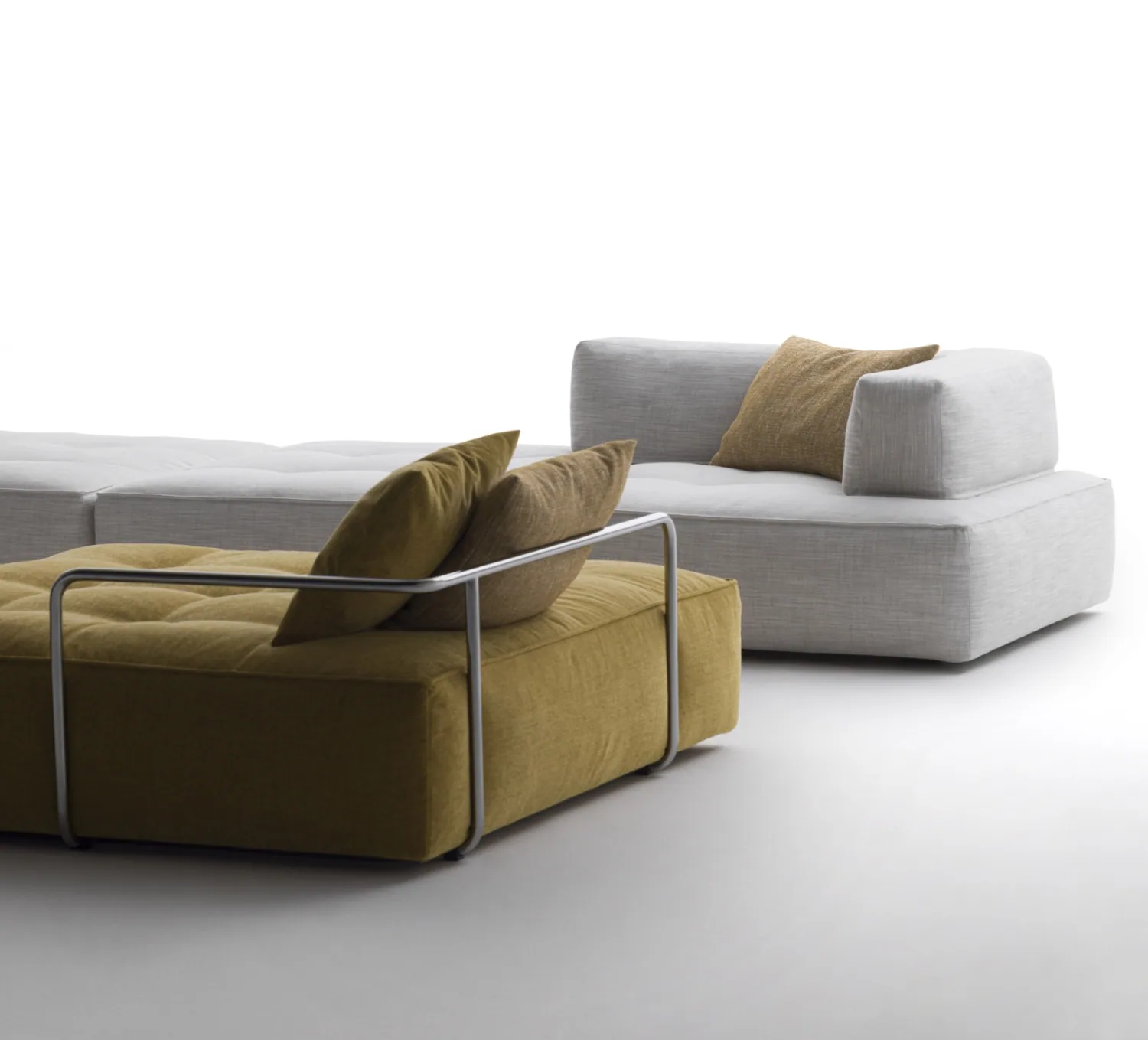
Featured image: a Cattelan Italia living-room setting with a sofa, glazing and curtains. Assess the window openings and curtain space in your own room rather than inferring clearances from the photograph. Photo credits: www.arredaremoderno.com.