

Sideboard behind a sofa: the measurements that make it work
The back of a sofa often marks the boundary between living and dining areas. A sideboard can make that boundary useful, adding storage without building a wall. But a convincing photograph can hide a familiar problem: the cupboard doors open into the route everyone uses. A sideboard behind a sofa works when its closed footprint and its everyday movements both fit.
Before comparing finishes, decide where you will stand to use it and which direction its doors will face. Those answers determine whether you need a deep storage unit, a shallower console or no furniture there at all.
Three arrangements with different consequences
| Arrangement | What to check |
|---|---|
| Sideboard close to the sofa back | Overall depth, access to doors and contact between surfaces. |
| A passage between sofa and sideboard | Whether the route remains usable when storage is open. |
| Sideboard perpendicular to the sofa | Turning space and corners projecting into circulation. |
Draw the room with the furniture actually in use. A dining chair pulled out from the table may occupy the same space as an open cupboard door. Looking at each piece separately conceals that overlap.
Choose the height from the sofa back, not a universal number
Compare the sideboard top with the fixed structure of the sofa and with its cushions in their normal position. A lower unit may keep the view open; a taller one can create a stronger division. Neither is automatically right.
Then look from the entrance and from a seated position. A lamp, vase or stack of books adds height even when the cabinet itself is low. Leave a safe relationship between objects and anyone leaning back, and avoid making the top a precarious ledge immediately behind someone’s head.
Depth is only the beginning of the calculation
Imagine 170 cm between the sofa back and the edge of a dining table. A 45 cm deep sideboard leaves 125 cm before allowing for doors, a person using the cabinet or a pulled-out dining chair. These are illustrative figures, not recommended clearances or product dimensions.
The useful question is whether the remaining space accommodates the activities that happen together. Try opening a door while someone passes towards the kitchen. For the whole layout, see our guide to positioning a sofa and dining table; use dining table dimensions and seating space to add the chairs accurately.
Check the back and the installation instructions
A back panel visible from the room should have a finish you are happy to see. However, a finished back is not proof that the unit may stand freely away from a wall. Follow the manufacturer’s installation and anti-tip requirements for the exact model.
If wall fixing is required, a sofa is not a substitute for the specified support. Do not omit a fixing because the arrangement looks stable. Choose furniture approved for the intended position, or change the layout with advice from a qualified installer where necessary.
Allow for doors, drawers and cleaning
Sliding fronts avoid a door swing, but you still need access to the contents and any internal drawers. Hinged doors need both their opening arc and a place for the user. Handles and projecting tops also belong in the maximum dimensions.
Consider how you will retrieve an object that falls between the pieces and clean the gap. Avoid forcing upholstered surfaces against sharp cabinet edges. Follow the furniture instructions for any contact or separation, rather than inventing a standard gap.
Plan power before adding a table lamp
A lamp can make this position useful in the evening, provided the lead reaches a suitable socket without crossing a walking route. Do not trap cables under furniture or arrange them where a drawer can catch them. If a new fixed electrical point is needed, use a qualified professional.
Keep the styling restrained until the practical arrangement is settled. A clear portion of the top makes it easier to use the sideboard rather than treating the whole surface as display.
When a console is the better answer
If you only need somewhere for a lamp and a book, a shallower console may be enough. If you need plates and table linen, enclosed storage may justify more depth. Mark both footprints with removable tape and rehearse the movements. Choose the piece that supports the room’s routine, not the one that fills the empty strip most completely.
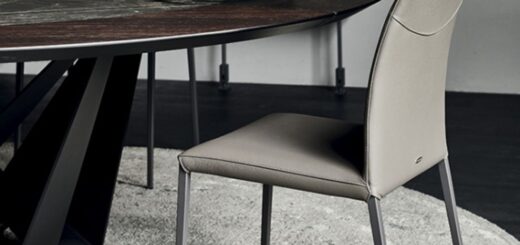
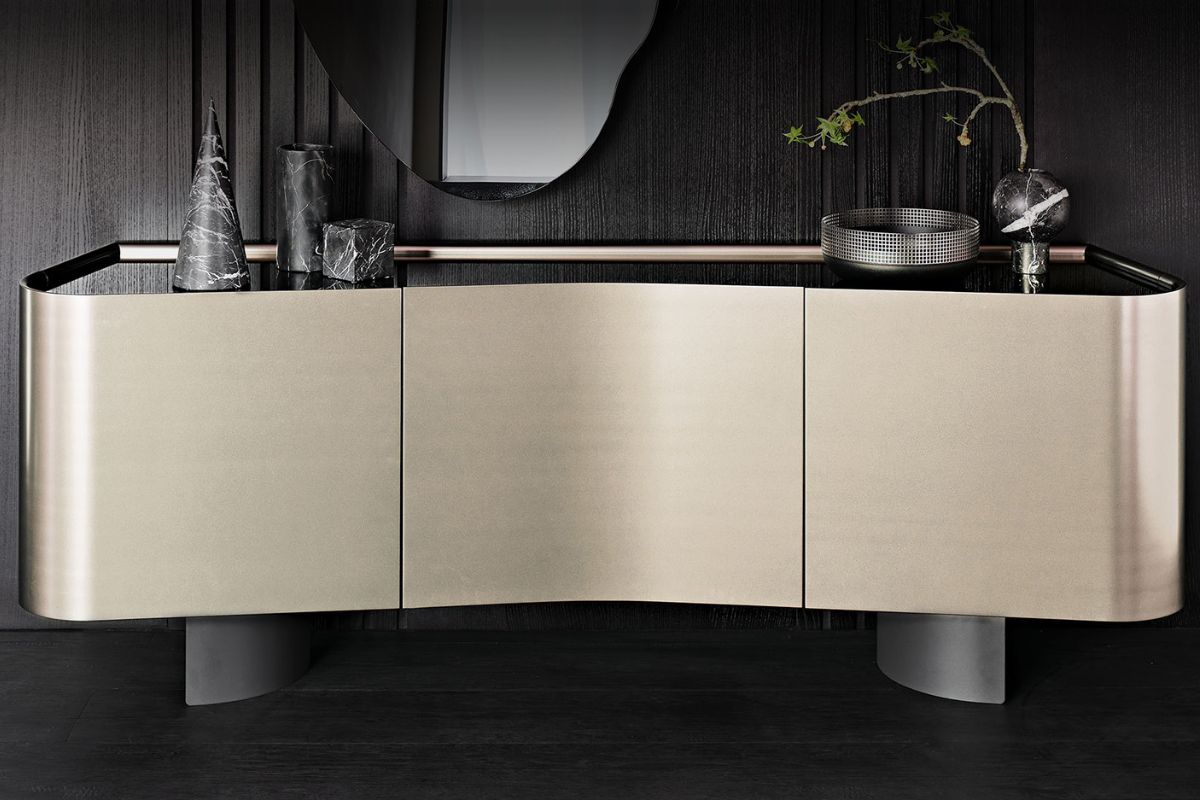
Featured image and article photograph: Cattelan Italia sideboard. Photo credit: www.arredaremoderno.com.