
Architecture Firms in Florence: 15 Names to Know for Interiors
In Florence, nobody designs from scratch. Beneath every project there is already something: a cross vault, a fresco resurfacing from behind the plaster, a pietra serena column, a convent turned into a home or a cinema created inside a fifteenth-century palazzo. That is why interior design here has an accent all its own: measured, cultured, used to conversing with the centuries without being overwhelmed by them.
We have selected 15 architecture firms in Florence and the surrounding area, from Sesto Fiorentino to Fiesole, worth knowing if you are thinking of renovating an apartment in the historic centre, opening a café or restaurant, or simply want to understand how interiors are designed today in one of the most layered cities in the world. We have grouped them by vocation: those who work with museums and major conversions, those who renovate period homes, and those behind the cafés, restaurants and hotels that Florentines actually go to.
How we chose the firms
We only considered firms based in Florence or its province, active today and with a portfolio in which interiors play a leading role. For each one we checked completed projects (real photos, not renders), features in magazines and on industry platforms, awards received and an active presence on Instagram, where the studios share their work in progress. This is not a ranking: the order follows project types, so you can find the right partner more quickly.
Museums, wineries and major conversions: where design meets history
Florence is an open-air laboratory for anyone who knows how to turn historic buildings into contemporary spaces. These firms have built their reputation on public and cultural projects, but the way they work with light, materials and existing structures is a useful lesson for anyone renovating a home, too.
Archea Associati
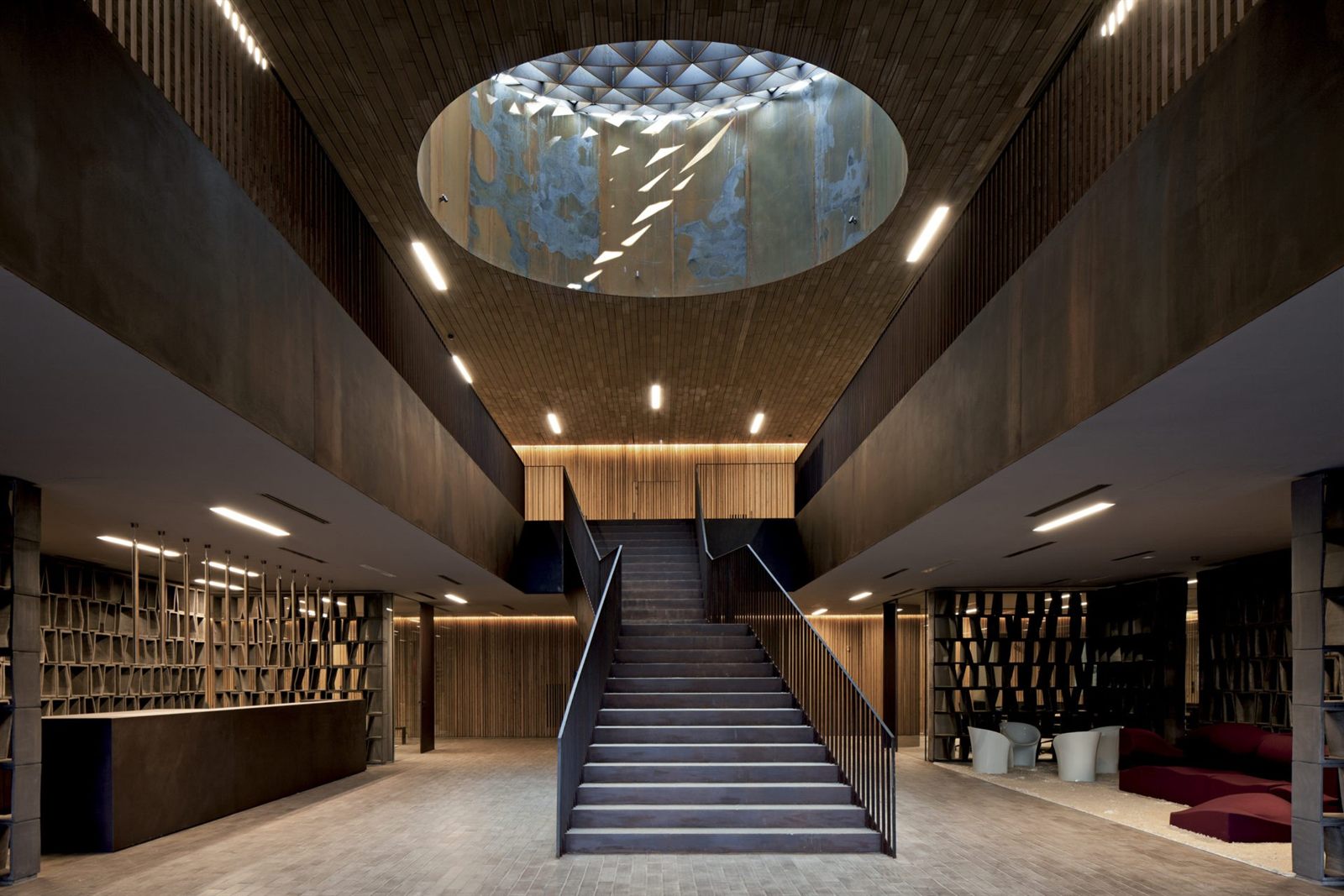
Archea Associati, Antinori nel Chianti Classico winery, Bargino (Florence). Photo: courtesy Archea Associati
Laura Andreini, Marco Casamonti and Giovanni Polazzi founded Archea in Florence in 1988; Silvia Fabi joined as a partner in 2001. Today the firm has its headquarters on Lungarno Benvenuto Cellini, offices in Rome, Milan, Genoa and Paris, and more than two hundred architects: it is the most structured practice in this selection, and one of the Italian names best known abroad.
Its signature project is the Antinori nel Chianti Classico winery in Bargino, dug into the hillside and almost invisible from outside: inside, a spiral staircase in Corten steel, barrel cellars with terracotta vaults and a large atrium that doubles as a library. It was one of the five finalists for the Mies van der Rohe Award 2015 and won at the AIT Awards 2012. In the city, Archea designed the Mercato Centrale on the first floor of the San Lorenzo market and Rifugio Digitale, a former air-raid shelter turned into an exhibition space, which won at the BLT Built Design Awards 2023. In 2025 came two golds at the Architecture Madrid Awards, one of them for the Viola Park of Fiorentina football club in Bagno a Ripoli.
Guicciardini & Magni Architetti

Guicciardini & Magni Architetti with Natalini Architetti, Museo dell’Opera del Duomo, Florence. Photo: Mario Ciampi
If you have visited a Florentine museum in the last fifteen years, chances are you have walked through a space by Guicciardini & Magni. The firm of Piero Guicciardini and Marco Magni has been working in via Guicciardini since 1990, has around forty architects and also has offices in Poggibonsi and Istanbul. Its speciality is museum display design: routes, lighting and mounts that let the works speak without ever stealing the show.
At the Museo dell’Opera del Duomo, designed with Natalini Architetti and reopened in 2015, the Sala del Paradiso recreates the cathedral’s Arnolfo di Cambio façade at full scale and houses the statues that once adorned it: a sight worth the visit on its own, which won the Dedalo Minosse award in 2017. The Museo Galileo, designed with Adolfo Natalini, received the ICOM Italia award in 2010 and the European Museum Academy Prize in 2011. In Pisa, the Museo dell’Opera del Duomo won first prize for restoration at the Premio Architettura Toscana (Tuscan Architecture Prize) 2022.
Ipostudio Architetti
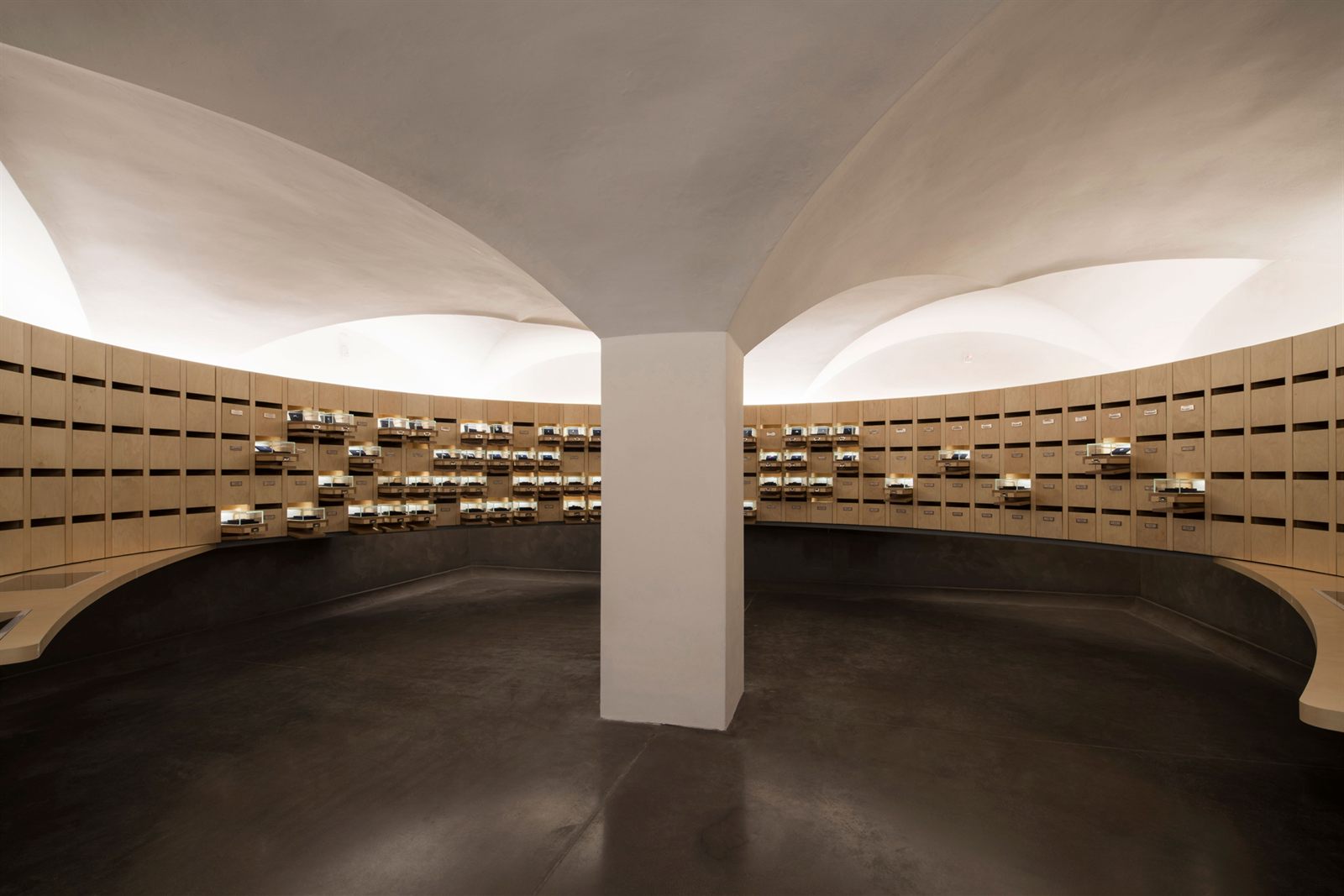
Ipostudio Architetti, Museo degli Innocenti, Florence. Photo: courtesy Ipostudio
Founded in Florence in 1983 by Carlo Terpolilli, Lucia Celle, Elisabetta Zanasi Gabrielli and Roberto Di Giulio, Ipostudio has its office in piazza Giuseppe Poggi, at the foot of San Niccolò, and a branch in Lugano. It works mainly on public buildings, hospitals, schools and museums, with a spare language that leaves room for light.
Its best-known work is the Museo degli Innocenti, in Brunelleschi’s complex on piazza Santissima Annunziata, which reopened in 2016 after an international competition won by a design team that also included Eutropia. Beneath the loggia, a new underground hall was created where a wall of small niches preserves the memory of the children taken in by the institution, while on the top floor the picture gallery displays works by the Della Robbia. The museum won the Premio Nazionale IN/Architettura (Italy’s national architecture award) 2020 for regeneration and restoration; in 2025 the firm also took first prize at the Architectural Heritage Award for the MICAS museum in Malta.
Studio Benaim
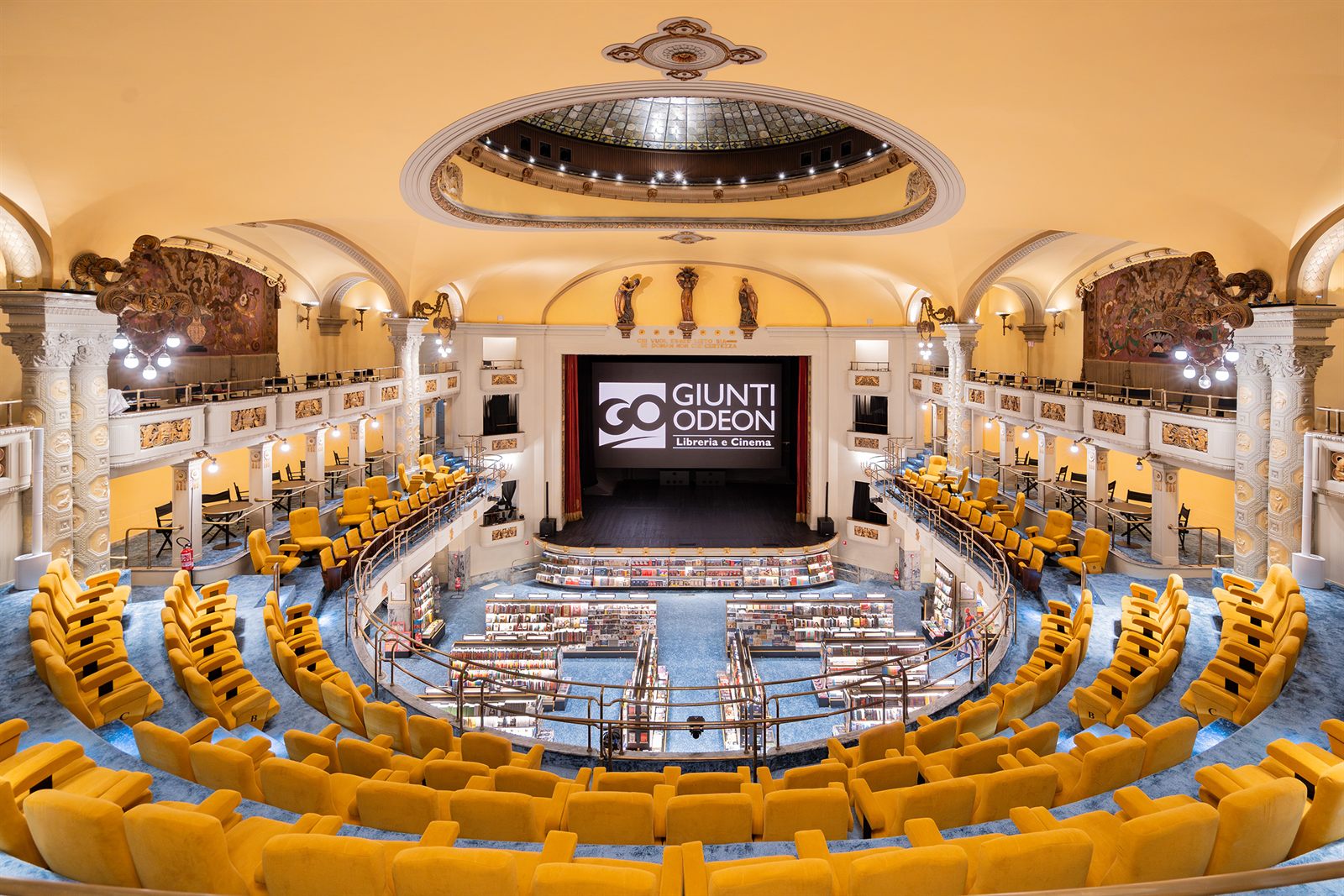
Studio Benaim, GO–Giunti Odeon, Florence. Photo: courtesy Studio Benaim
Led by its founder André Benaim, with some thirty years of experience behind it, the studio is based in via della Fornace and works across private homes, conversions, hospitality and cultural venues. The project Florentines love most is the GO–Giunti Odeon: the historic cinema in Palazzo dello Strozzino, with its dome and original decorations restored, is now also a large bookshop, with shelves that come right down into the stalls. The project won joint first prize for restoration at the Premio Architettura Toscana 2024.
The portfolio also includes Fede, the cocktail bar at Hotel Balestri on the Lungarno, designed by Oscar Benaim, and the new building at Fattoria Le Pupille in the Maremma, shortlisted for the Premio Architettura Toscana 2026. In the city, the most recent apartments reveal a refined domestic side: wood panelling, gallery-style picture walls and brass chandeliers.
Luigi Fragola Architects
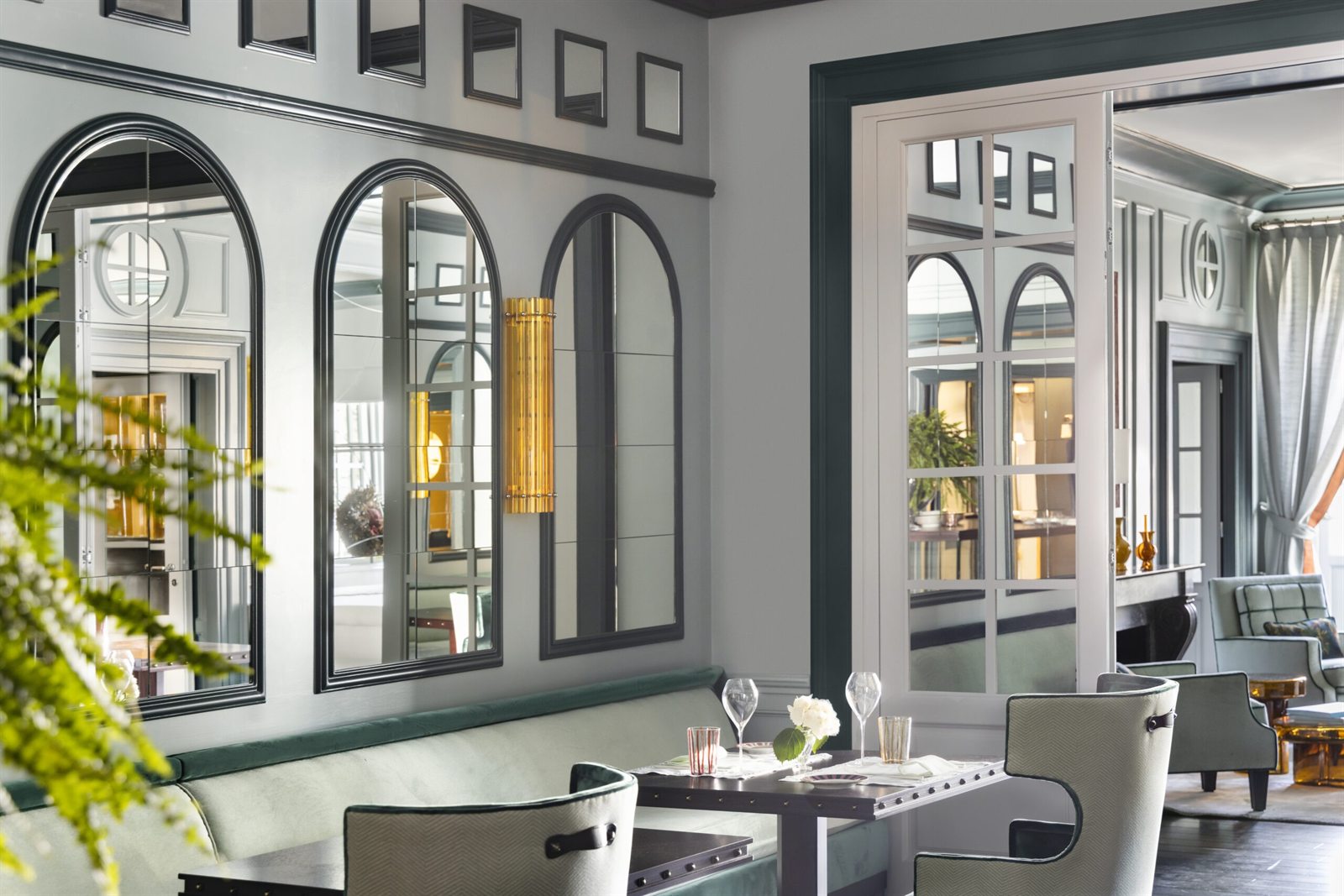
Luigi Fragola Architects, The Place, Florence. Photo: Dario Garofalo
Luigi Fragola studied design at IED in Rome and architecture in Florence, and worked for Yoox and alongside Michele Bönan before opening his own studio in 2005. Today it is based in via Palestro, a stone’s throw from Santa Maria Novella station, and his name appears more and more often in AD, Elle Decor, Wallpaper and Frame, above all for hotels and public venues created inside historic buildings.
On piazza Santa Maria Novella he designed The Place (2021), a boutique hotel whose interiors echo the geometry and colours of the basilica’s façade: arched windows, coffered ceilings, shades of green and grey. Close by, in the former Ariston cinema, he created H Zero (2022), the museum of miniature worlds built around a 280-square-metre model railway, preserving the memory of the old auditorium. His most recent work is in Fiesole: Villa San Michele, the former Franciscan monastery turned Belmond hotel, which reopened in April 2026 after eighteen months of works, with interiors by Fragola together with the group’s own team, in terracotta, marble and Tuscan ceramics.
Period homes and apartments: the firms to call for a renovation in Florence
Frescoed ceilings, terracotta floors, pietra serena, exposed beams. Renovating a home in Florence often means coming to terms with the past, and with the Soprintendenza, the local heritage authority. These firms have turned that dialogue into a craft.
Pierattelli Architetture
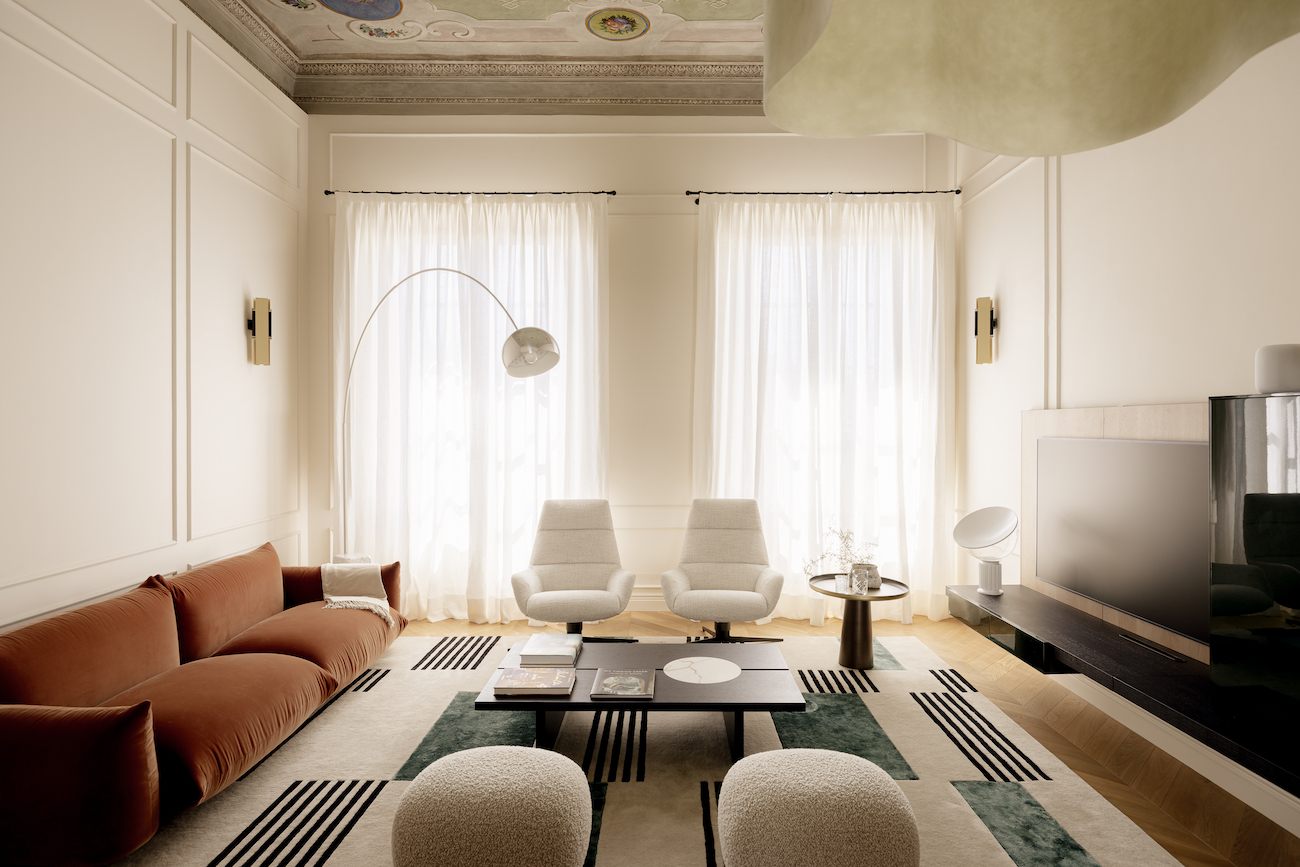
Pierattelli Architetture, Casa A, Palazzo Stefanelli, Florence. Photo: Iuri Niccolai
Founded in 1980 by Massimo Pierattelli and now run together with his sons Andrea and Claudio, the firm has its long-standing headquarters in via Pandolfini, an office in Milan since 2022 and a team of twenty professionals. Having started out designing bank and corporate headquarters, over the years it has moved towards homes and hospitality, with a clear idea: let the past remain the protagonist.
Casa A proves the point. Completed in 2025 in Palazzo Stefanelli, in Borgo Pinti, a nineteenth-century building the firm had already restored in its entirety, it covers one hundred and thirty square metres in which frescoed ceilings converse with Arflex’s Marenco sofa in rust velvet, Cassina’s Biombo bed and a walnut staircase that disappears into the bedroom wall and, by rotating ninety degrees, leads up to a mezzanine study. Other projects include YellowSquare, which redefined the idea of the hostel in Florence, and the boutique hotel Pieve Aldina in Chianti. With its Villa Gelsomino project the firm won a THE PLAN Award 2023 in the category for homes still at the design stage.
DEFERRARI+MODESTI

DEFERRARI+MODESTI, Casa GZ, Florence. Photo: Anna Positano and Gaia Cambiaggi | Studio Campo
Javier Deferrari, an Argentinian who trained at the Politecnico di Milano, and Lavinia Modesti, who grew up professionally alongside Enzo Mari, founded the studio in Florence in 2010. They are based in via Gino Capponi and since 2017 have coordinated the Interior Design degree course at IED Florence. Their signature is unmistakable: arches, colour, bespoke furniture and a free-spirited use of designer pieces.
Their latest project is Casa GZ, in the Santa Croce neighbourhood: one hundred square metres on the ground floor of a nineteenth-century building next to the former monastery of San Francesco de’ Macci, with an eighty-square-metre garden where the nuns once kept their vegetable plot. Pietra serena columns run through the entire home, a fresco discovered during the works has been left on view in the girls’ bedroom, and the bathroom floor reinterprets the marble inlays of the Duomo. Before that came TH01 Targetti Hub, winner of the BIG SEE Interior Design Award 2020 and the Iconic Awards 2021; that same year the studio exhibited in the Italian Pavilion at the Venice Biennale.
Eutropia Architettura
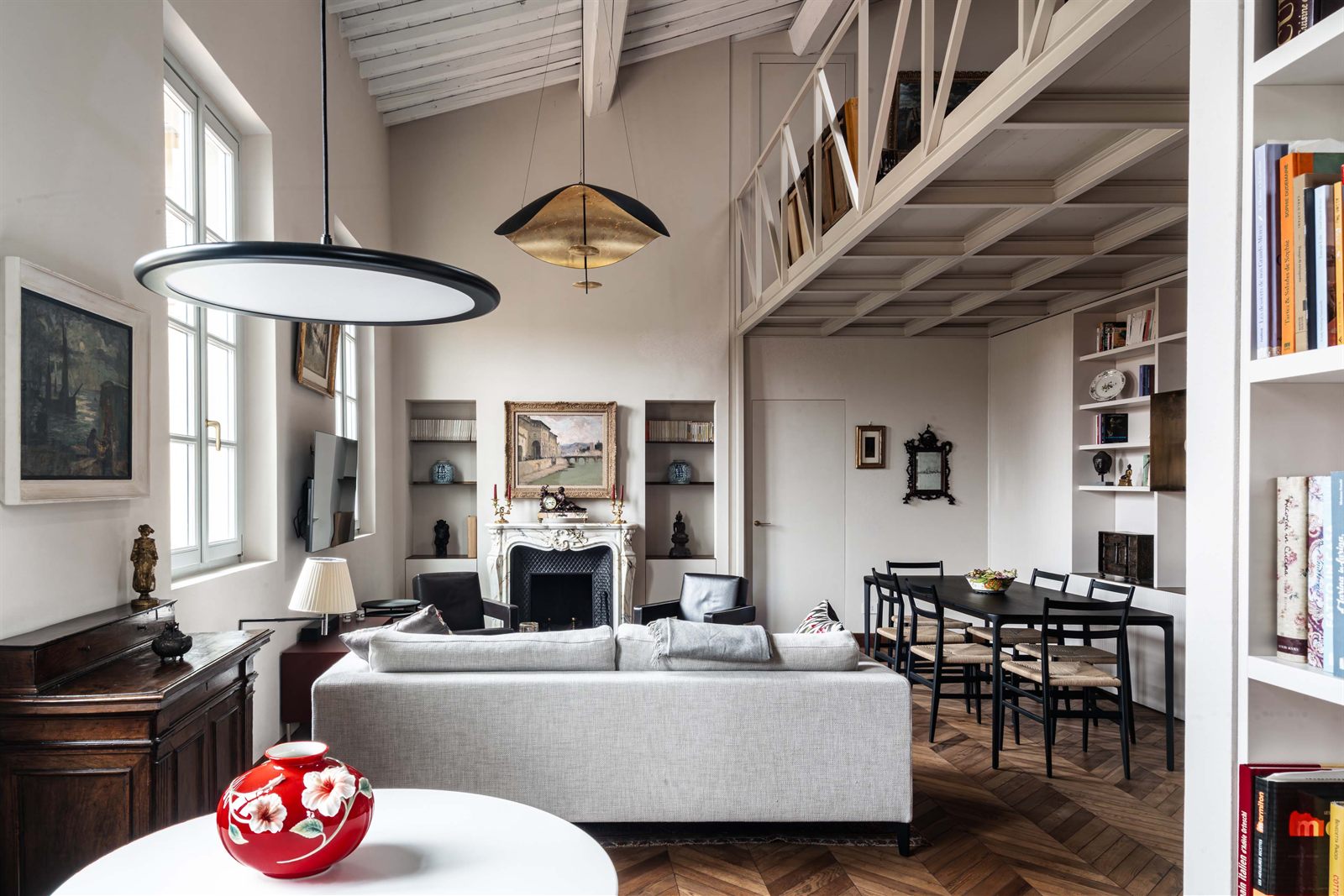
Eutropia Architettura, Oltrarno apartment, Florence. Photo: Jacopo Carli
Eutropia was founded in 2003 by Matteo Baralli, Luca Barontini, Jacopo Carli and Antonella Tundo; Valentina Pieri joined as a partner in 2010. The studio is based in via Arnolfo, with offices in Livorno and Galatina, and has a portfolio that moves naturally from restoration to public squares and private apartments. It was part of the team that won the competition for the new Museo degli Innocenti, and in 2026 it took first prize for public spaces at the Premio Architettura Toscana with Da piazza a piazza in Certaldo.
Homes are where the studio is at its best. In the Oltrarno apartment, completed in 2025, the double-height living room is dominated by a mezzanine library beneath the old beams; Camera con vista opens its windows directly onto the Campanile and the dome of the Duomo; in Settignano, Pop Blu brings wood panelling and blue tables into a house with views over the hills. The photographs are almost always by Jacopo Carli, who is also one of the studio’s founding partners.
Michele Bönan
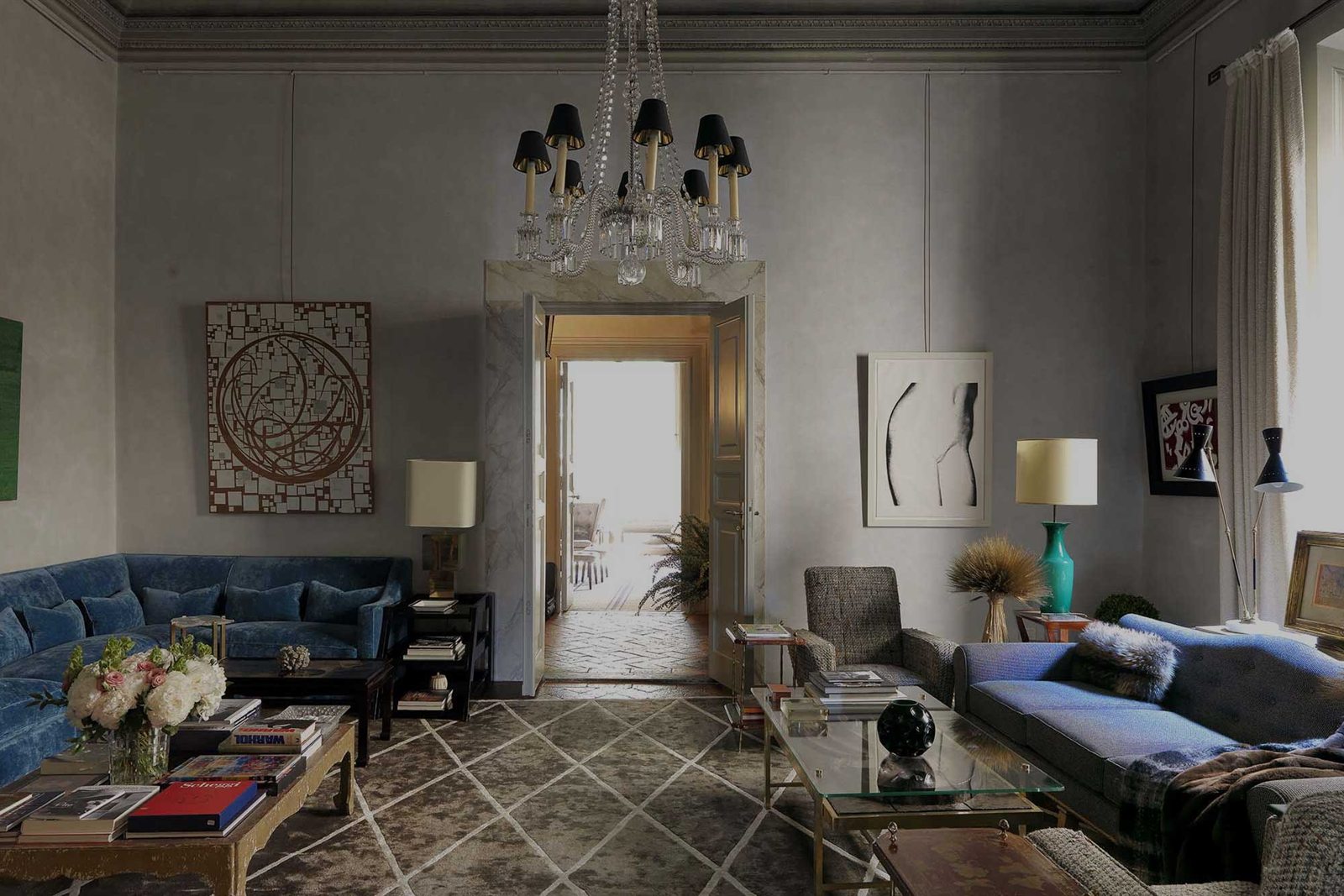
Michele Bönan, private residence, Florence. Photo: courtesy Michele Bönan
Florentine Michele Bönan was twenty when AD published his first project, tennis champion Adriano Panatta’s house in Forte dei Marmi. Since then he has become one of the leading names in luxury interior design in Italy, with a monograph published by Assouline. His studio is in a Renaissance palazzo on Lungarno Guicciardini, while the showroom for his furniture collections is at the Limonaia Torrigiani, in the Oltrarno.
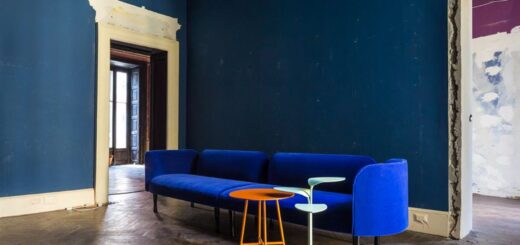
His style is classicism revisited with a touch of irony: velvets, bookcases, crystal chandeliers, antiques set alongside design pieces. In Florence you can see it in the private residences of Palazzo Tornabuoni, in the heart of the historic centre, with libraries beneath painted beamed ceilings and bedrooms overlooking the dome of the Duomo, and in the Ferragamo family’s hotels on the Arno: the Portrait Firenze, the Hotel Lungarno and the Continentale. In private homes, such as the Florentine residence with the blue velvet sofas, the same taste becomes more domestic.
Cafés, restaurants and hotels: designer hospitality in Florence
A city that welcomes millions of visitors a year is also a huge stage for interior design. Behind many of the most talked-about venues and hotels are these studios.
q-bic
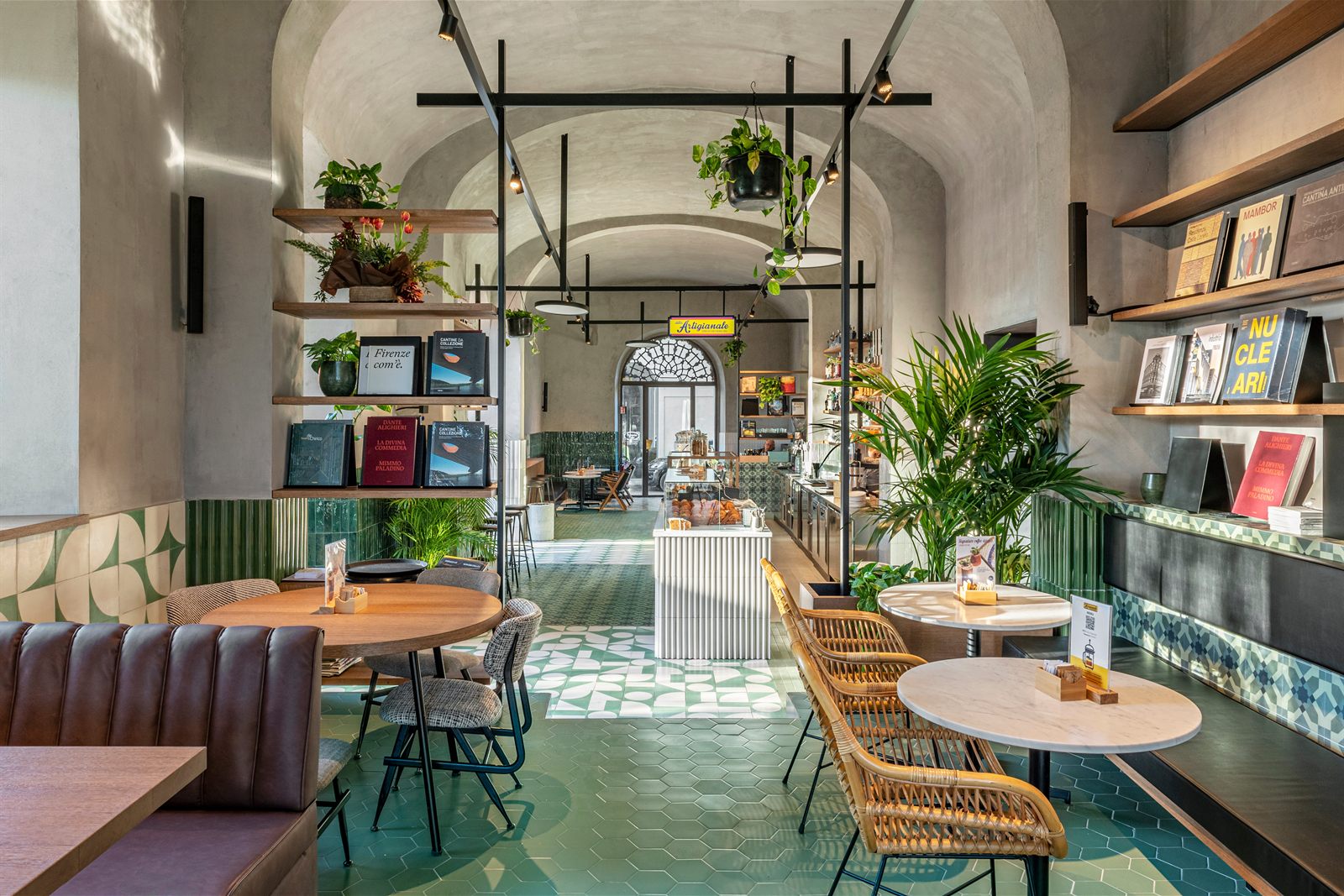
q-bic, Ditta Artigianale, piazza Ferrucci, Florence. Photo: Leonardo Morfini
Architect Luca Baldini and designer Marco Baldini founded q-bic in 2005; today the studio, in via Aretina, has a team of around a dozen. If you have had a good coffee in Florence, chances are you had it in one of their spaces: q-bic has designed every branch of Ditta Artigianale, from the vaulted room with green tiles in piazza Ferrucci to the one in via Carducci, set in the former monastery of Sant’Ambrogio, through to the seventh, which opened in via Solferino in early 2026. The studio also designed the first version of La Ménagère, the restaurant and concept store in via de’ Ginori.
Its most important project is Factory, at Manifattura Tabacchi: an industrial building in the former tobacco factory turned into spaces for working and meeting, which won joint first prize for regeneration at the Premio Architettura Toscana 2024, together with landscape architect Antonio Perazzi. Ditta Carducci received the award for best interior design at the Food & Wine Awards 2021, and the studio also designs products, such as the WATT collection for Treemme, which won a Red Dot in 2022.
Claudio Nardi Architects
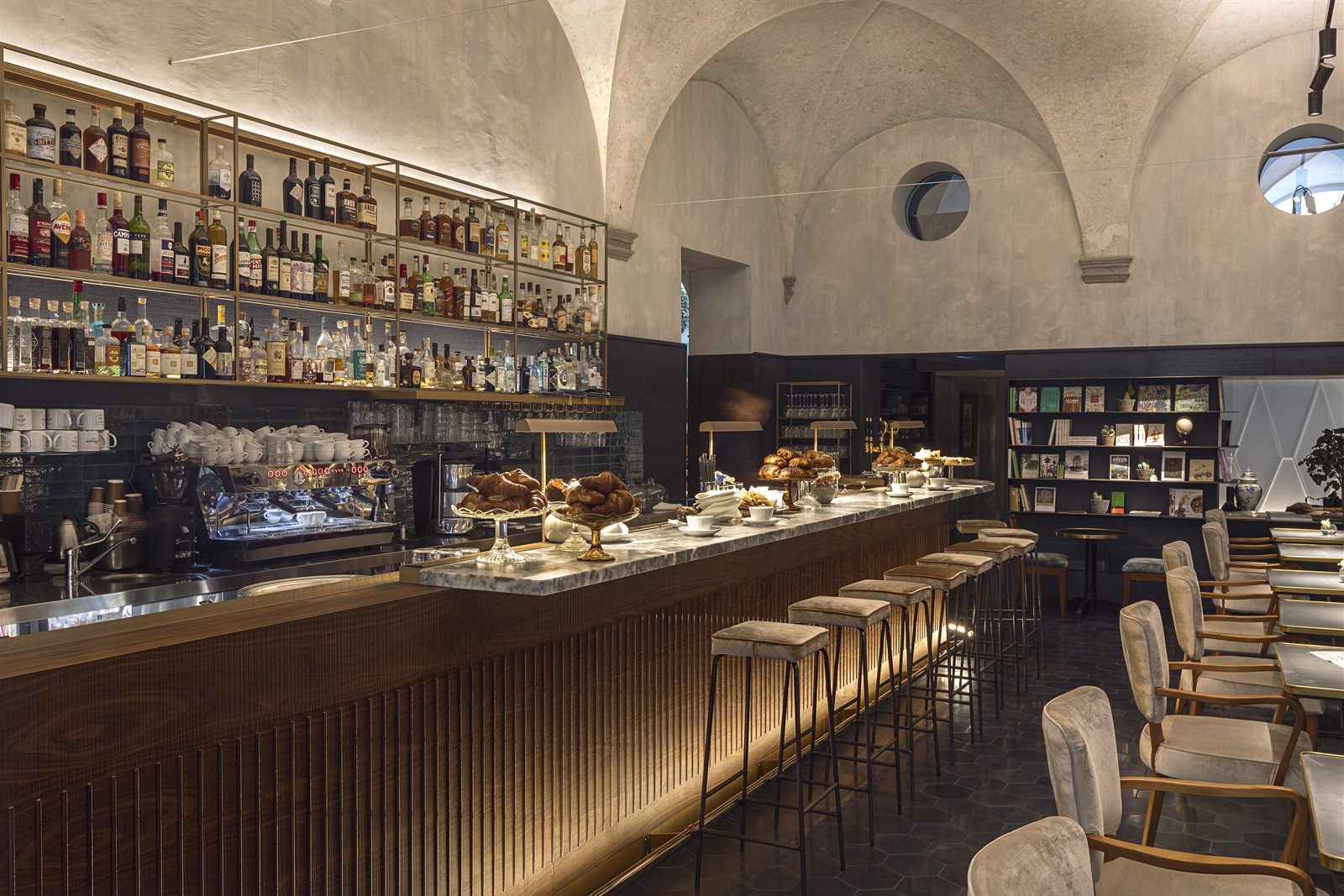
Claudio Nardi Architects with Matteo Crociani, La Ménagère, Florence. Photo: Mattia Aquila
Born in Prato in 1951, Claudio Nardi has been practising since 1979 and has his studio in via Ippolito Pindemonte. He is one of the most international Florentine architects: in Kraków he designed MOCAK, the museum of contemporary art created in the former Schindler factory, nominated for the Mies van der Rohe Award 2013 and awarded gold at the Italy International Design Award 2020.
In Florence his name is linked to Riva Lofts, a former artisan building on the Arno turned into a boutique hotel, which in 2008 won the Wallpaper* Design Award for best new hotel. More recent is the restyling of La Ménagère, carried out in 2021 with Matteo Crociani: the long illuminated counter, the vaults and the shelves laden with coloured glass make the via de’ Ginori venue one of the most photographed in the city. His CV also includes the Premio Dedalo Minosse and the Premio Philippe Rotthier, both in 2011.
Studio63
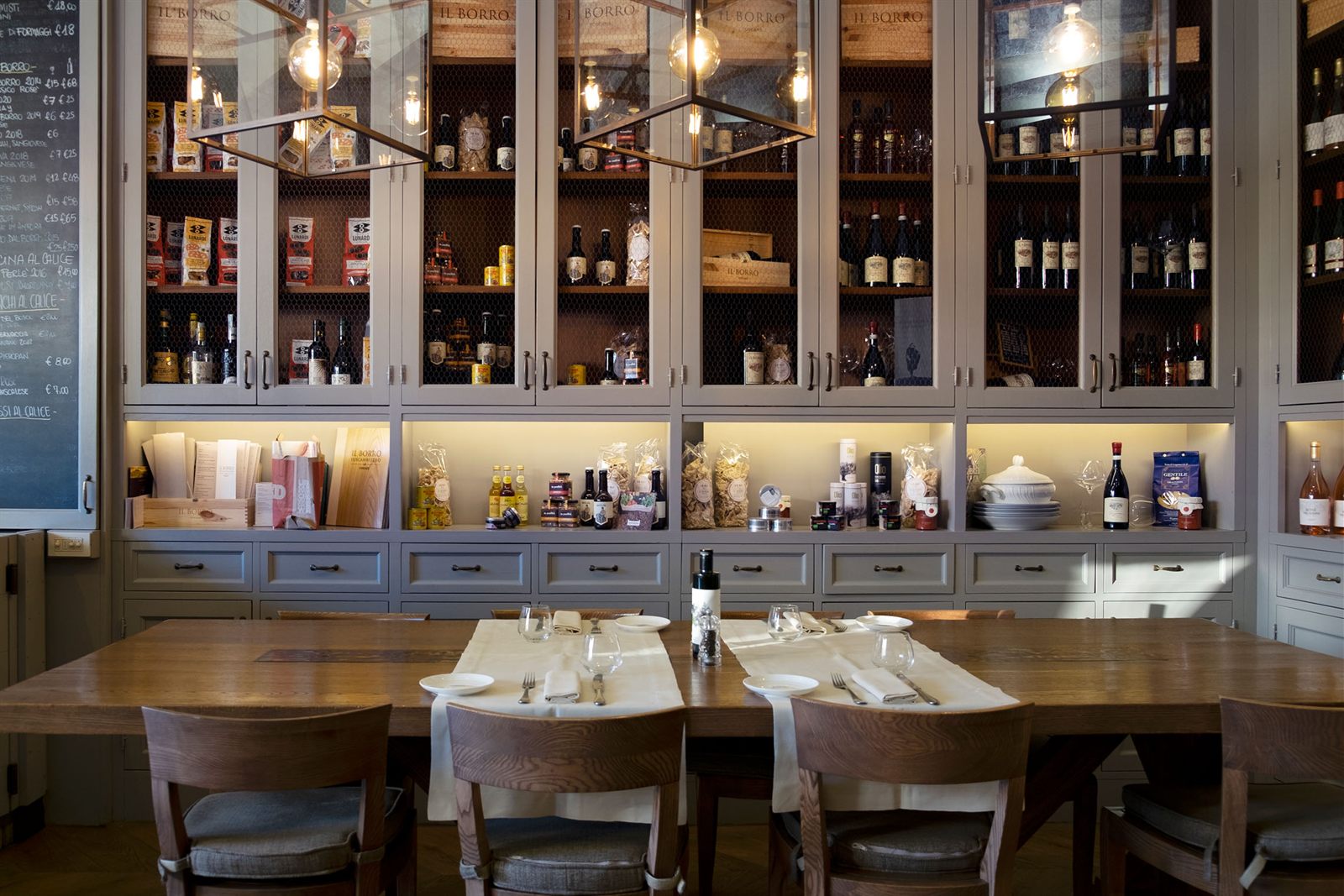
Studio63, Il Borro Tuscan Bistro, Florence. Photo: courtesy Studio63
Founded in 1998 by Piero Angelo Orecchioni and Massimo Dei, who runs it today, Studio63 is based in via dei della Robbia and combines interiors with product design. It is the studio that brought to Florence the idea of the shop as a space to be lived in: the Tanini bathroom showroom won the Best Showroom Award at Cersaie 2011.
On Lungarno Acciaiuoli stands Il Borro Tuscan Bistro, opened in 2013 and renovated in 2021: long tables, walls of bottles, vaulted ceilings and soft lighting make it one of the most elegant restaurants overlooking the Arno. Its hospitality projects also include the Sixty Hotel in Riccione, which won the Sleep Award 2007, while the Trama washbasin designed for NIC Design won the Archiproducts Design Award.
ZPSTUDIO
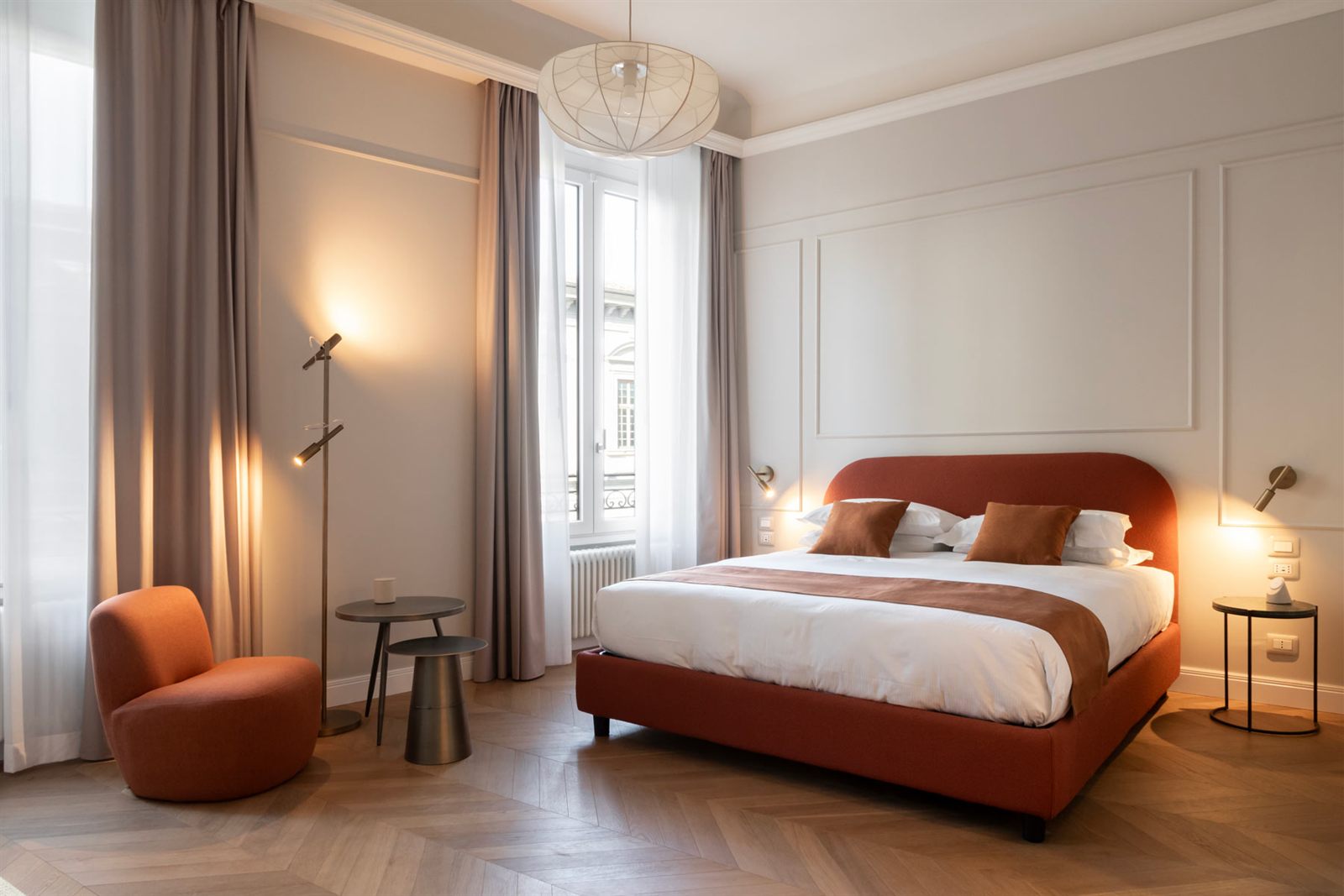
ZPSTUDIO, Dimora Le Logge Suites, Florence. Photo: Matteo Zetti / ZPSTUDIO
Eva Parigi and Matteo Zetti founded ZPSTUDIO in Florence in 2003; today the studio has two offices, one in Sesto Fiorentino and one in the centre, in via Fra’ Giovanni Angelico. Their style is warm and tailored: wood panelling, wallpaper, bespoke furniture and an obsessive attention to the kind of details you only notice by living in a space.
Dimora Le Logge Suites shows this well: seven suites right in the historic centre, with red headboards, botanical wallpapers and windows looking onto Palazzo Vecchio. The project won the BIG SEE Interior Design Award 2026, following the one won by Volta Apartment in 2023. In the city the studio has also designed the Alfieri 9 Hotel, while in Sesto Fiorentino Casa BM translates the same language into a home of one hundred and twenty square metres. The studio has also been collecting Best of Houzz awards for several years.
GLA – Genius Loci Architettura
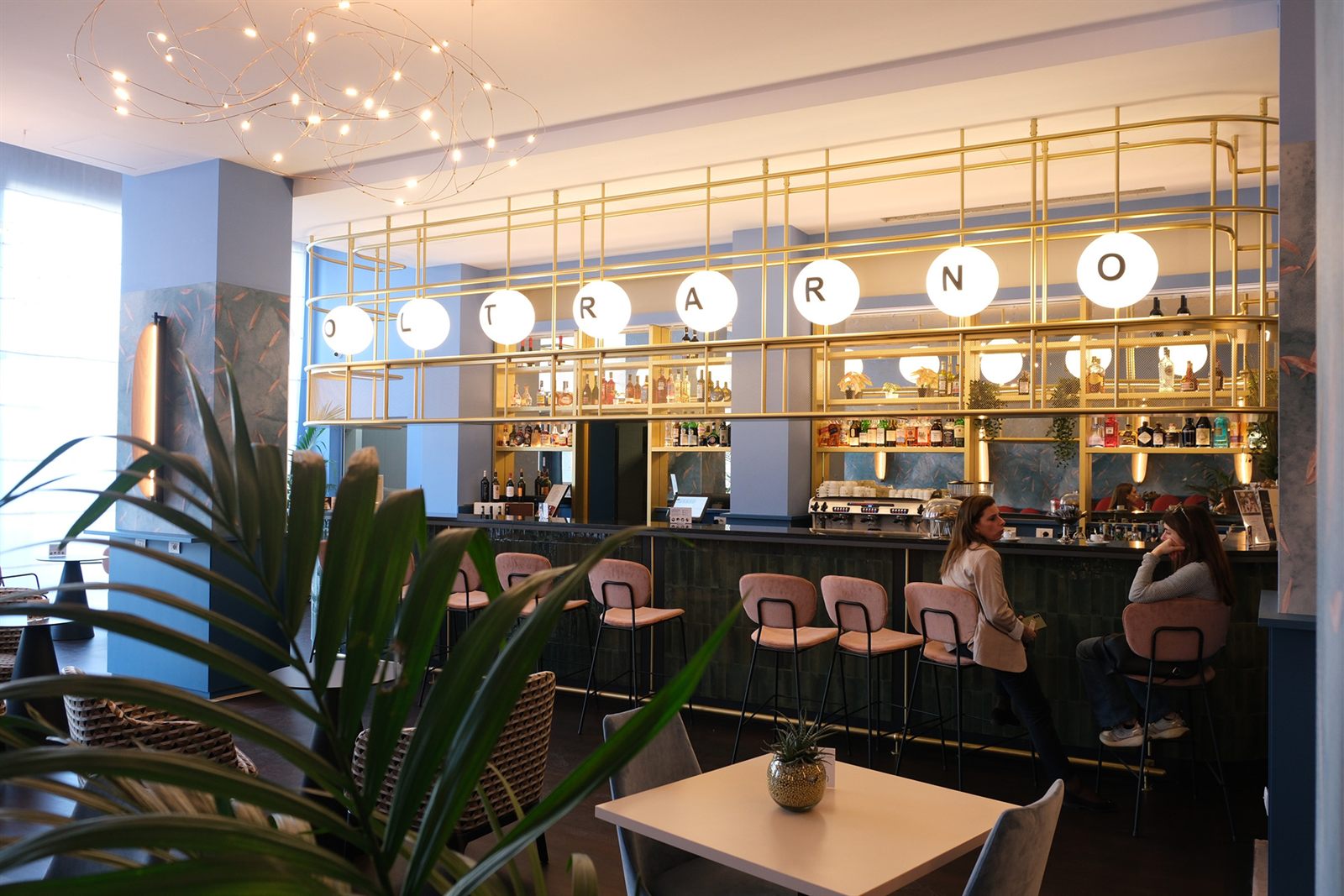
GLA – Genius Loci Architettura, DoubleTree by Hilton Florence Metropole, Florence. Photo: courtesy GLA
Founded in the late 1990s by Andrea Grassi, GLA splits its work between Milan and its Florence office in via dei Mannelli, and can count on a team of more than forty people, including employees and consultants. The firm is closely tied to the hotel world and to major clients: in Scandicci it designed the Gucci ArtLab, the fashion house’s hub for leather goods and footwear.
In the city it handled the interiors and art direction of the DoubleTree by Hilton Florence Metropole, renovated between 2021 and 2024: a bar-lounge with a gold counter, blue walls, pink seating and plants that bring colour into a large hotel. Its latest projects include the Aparto in Rifredi, and in 2022 the firm was among the finalists of the MIPIM Awards.
Simone Micheli Architectural Hero
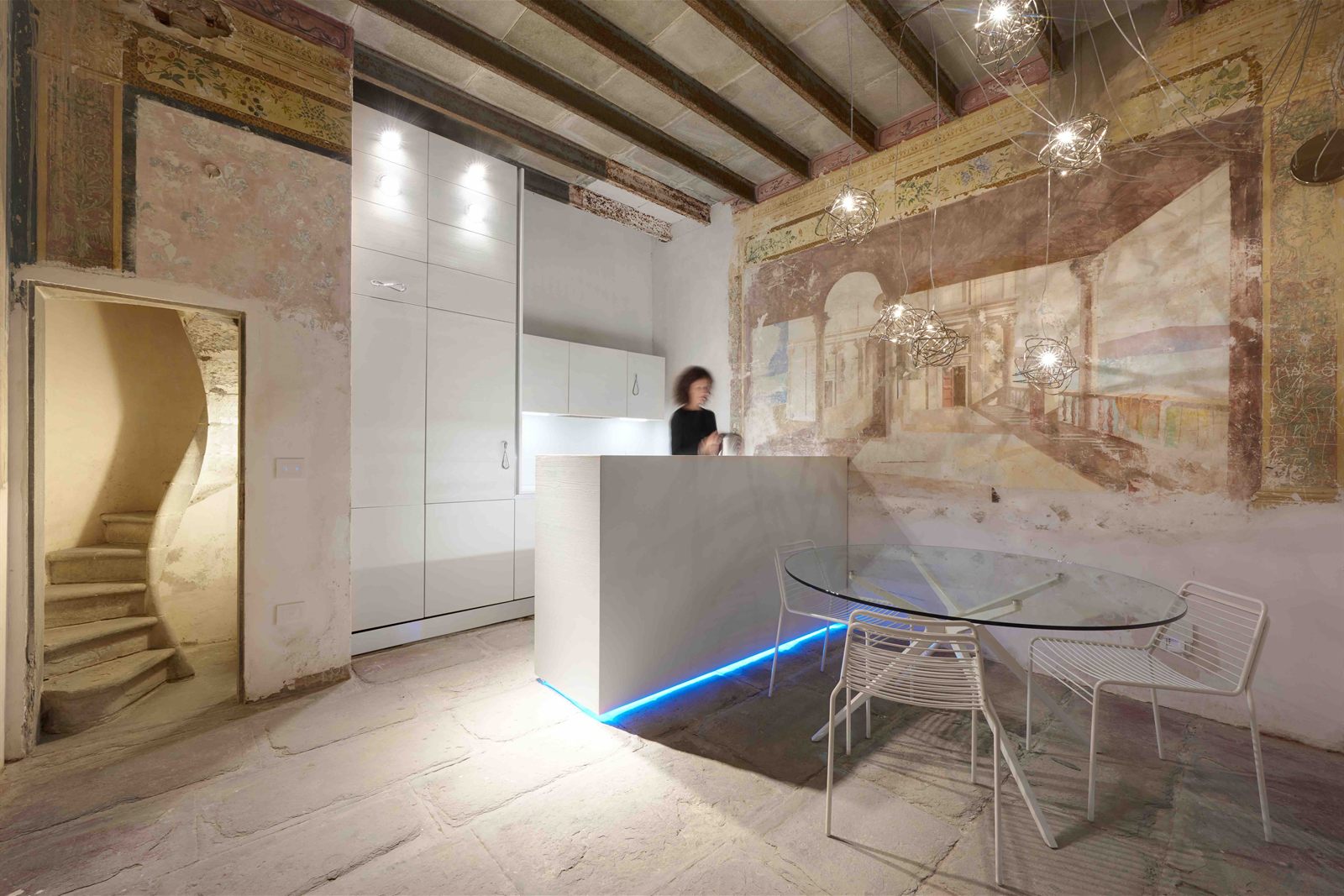
Simone Micheli Architectural Hero, Torre di Maiano, Fiesole. Photo: Jürgen Eheim
Simone Micheli, born in Viareggio in 1964, who died at the end of December 2025, was one of the most recognisable Italian designers in the world of hospitality and wellness. The studio, founded in 1990 and incorporated in 2003 with Roberta Colla, now its CEO, is based in via Aretina, with offices in Milan, Dubai, Rabat and Busan, and carries on the work: in April 2026 it presented the installation senzaFINE for INTERNI Materiae during Milan Design Week.
His fluid, theatrical language is neatly summed up by the Torre di Maiano in Fiesole, where a sculptural white kitchen and integrated lighting coexist with the tower’s frescoes. His awards include Interior Design magazine’s Best of Year 2010 for the Atomic Spa in Milan, the International Hotel & Property Award 2015 for the interiors of the Barceló Milan, and the title of Interior Designer of the Year at the International Design Award 2008.
How to choose an interior architect in Florence
The first criterion is the match between your project and the studio’s portfolio. A firm that excels at museums or restaurants is not necessarily the best choice for a one-bedroom flat in need of renovation, and vice versa. Look at completed projects, not just renders, and ask to see work similar in type, size and budget.
In the historic centre, a UNESCO World Heritage Site, almost every project involves restrictions and permits: painted ceilings, façades, window frames, even the colour of the shutters. Choose someone who knows the Soprintendenza’s procedures and has already worked in palazzi similar to yours. Finally, make clear from the outset what the brief includes: design only, site supervision, furniture selection or a full turnkey service.
If you would like to compare approaches and styles, we have also rounded up the architecture firms in Rome to know for interiors and the interior architecture studios in Turin, as well as the famous Italian architects who changed the history of design.
Frequently asked questions about interior architecture firms in Florence
What is the difference between an architect and an interior designer?
In Italy, an architect is a professional registered with the Ordine degli Architetti (the professional body) and can sign off building projects, planning applications to the municipality and site supervision. An interior designer focuses on layout, furnishings, materials and the atmosphere of a space. Many of the studios in this selection bring both roles together, so they can follow a renovation from the architectural design right through to the last finishing touch.
Which Florence firms specialise in period apartments?
Pierattelli Architetture, DEFERRARI+MODESTI, Eutropia and ZPSTUDIO have completed several projects in historic palazzi in the centre, from Borgo Pinti to Santa Croce and the Oltrarno. Michele Bönan, with the residences in Palazzo Tornabuoni, and Studio Benaim also often work on homes with decorated ceilings, beams and original floors.
Who should I hire to design a restaurant, bar or hotel in Florence?
For cafés and restaurants the go-to names are q-bic, Studio63 and Claudio Nardi Architects; for hotels, ZPSTUDIO, GLA – Genius Loci Architettura and Simone Micheli Architectural Hero, which has made hospitality and spas its speciality.
Which Florentine architecture firms have won major awards?
Archea Associati was a finalist for the Mies van der Rohe Award with the Antinori winery. Ipostudio won the Premio Nazionale IN/Architettura with the Museo degli Innocenti, Claudio Nardi the Wallpaper* Design Award with Riva Lofts, and ZPSTUDIO and DEFERRARI+MODESTI the BIG SEE Interior Design Award. Winners at the Premio Architettura Toscana include, among others, q-bic, Studio Benaim, Guicciardini & Magni and Eutropia.
Do Florence-based firms also work outside Tuscany?
Yes. Archea Associati, GLA, Pierattelli Architetture and Simone Micheli Architectural Hero also have offices in Milan, and several studios run projects all over Italy and abroad, from the MICAS museum in Malta to MOCAK in Kraków.