

How to clean lacquered furniture in gloss and matt finishes
A soft microfibre cloth, a mild neutral cleaner and careful drying: how to clean lacquered furniture in gloss and matt finishes without streaks or scratches, what the manufacturers tell you to avoid and how to deal with stains on white or black high gloss.
To clean lacquered furniture, all you need is a soft microfibre cloth lightly dampened with water and a mild, non-abrasive neutral detergent, followed by a wipe with a dry cloth. Deal with spills straight away, before they dry, and never scrub hard.
The care guides published by furniture makers agree on what to keep away from lacquer: solvents, acetone, ammonia, abrasive products, waxes and silicones. On alcohol they do not all say the same thing, and for lacquered wood or MDF the safest rule is not to use it.
In short
- Everyday cleaning: damp microfibre cloth, neutral detergent, then dry thoroughly.
- Gloss and matt lacquer are cleaned the same way; matt is more sensitive to rubbing and to polishing products.
- Avoid: acetone, trichloroethylene, ammonia, solvents, scouring powders and pads, wax, silicone, steam.
- Alcohol: ruled out by Veneta Cucine and Alivar for lacquered surfaces; Bontempi allows it only on lacquered metal.
- White or black high gloss: blot at once, diluted neutral detergent, rinse and dry; no stain removers.
How do you clean lacquered furniture, step by step?
Proper cleaning takes three moves: remove the dust, wash with a gentle detergent, dry. Lacquered furniture brings a touch of elegance to any room, but the finish is delicate, and how you clean it matters as much as what you clean it with.
- Dust with a clean, dry, soft cloth. Bontempi recommends this as the daily routine for lacquered wood, and dust lifted dry will not scratch the surface when you move on to the damp cloth.
- Wash with a microfibre cloth dampened with water and a few drops of neutral detergent. This is what Veneta Cucine recommends for all its surfaces, lacquered doors and tops included.
- Rinse with a cloth dampened with plain water to lift any detergent residue, which would otherwise dry into streaks.
- Dry the surface and the edges with a dry cloth so no water is left standing: moisture trapped along the edges is one of the most common causes of damage.
Act straight away
Treat marks as soon as they appear. Left to dry, they turn into ingrained dirt that is hard to shift and tempts you to scrub or reach for something harsher. The Veneta Cucine manual lists coffee, wine and tomato among the substances to remove from doors and worktops as quickly as possible.
The right cloth for cleaning lacquered furniture
Use a soft, lint-free fabric such as microfibre or chamois leather. Scouring sponges, including the rough side of an ordinary kitchen sponge, can damage the finish permanently.
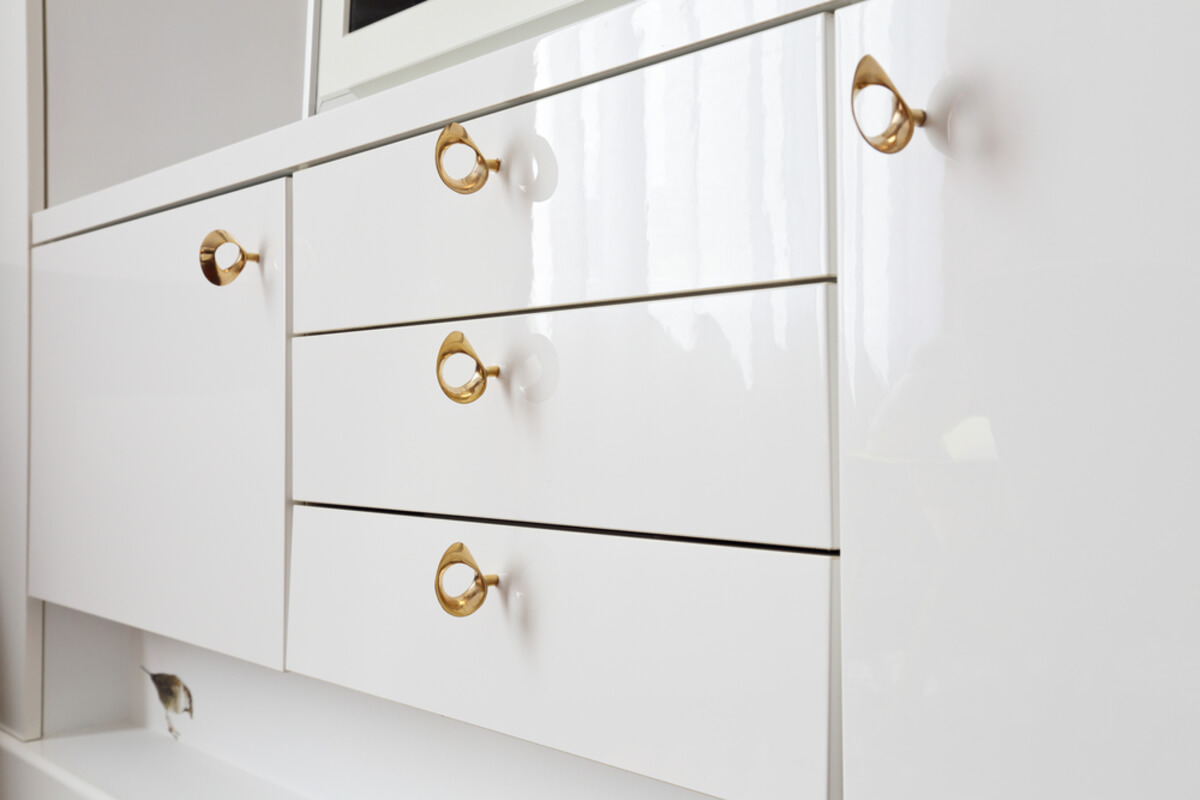
How to clean lacquered furniture: a soft cloth and a neutral detergent. Image by Shutterstock
Is cleaning gloss lacquer different from cleaning matt lacquer?
The basic method is the same, but the two finishes react differently to mistakes. On high gloss you mainly see streaks and fine scratches; on matt the risk is creating shiny patches, because heavy rubbing or a wax-based product changes the look of the surface.
| Aspect | Gloss lacquer | Matt lacquer |
|---|---|---|
| Everyday cleaning | Damp microfibre and neutral detergent, then dry | Damp microfibre and neutral detergent, then dry |
| Most visible flaw | Streaks, fingerprints, fine scratches | Shiny patches, greasy marks |
| What to avoid | Rough or dusty cloths | Rubbing hard on the same spot |
| Furniture polish | Not recommended if it contains wax or silicone | Not recommended: it changes the level of sheen |
For matt finishes there is one more tip in the Alivar care guide: on painted wood, do not rub vigorously, because you can alter the sheen of the paint, and wipe along the grain.
What products should you use on gloss and matt lacquered furniture?
For both finishes the product manufacturers point to is a neutral, non-abrasive detergent well diluted in water. You do not need a special matt lacquer cleaner: you need something gentle, with no wax or silicone, which the Veneta Cucine manual rules out because they can cause streaks or an uneven sheen.
A natural option: Marseille soap
The most popular home remedy is Marseille soap: dissolve a few flakes in a bowl of lukewarm water, wipe with a well wrung cloth without rubbing, then rinse and dry with a clean cloth. Dilution is the key: every trace of suds must go, or it leaves a dull film. If the maker of your furniture specifies a neutral detergent, use that instead.
If the manufacturer recommends a specific product
Alivar accepts commercial cleaners for a deeper clean, provided you follow the maker’s instructions and test them first on a hidden spot. It is a sensible rule for any new product.
Can you use alcohol on lacquered furniture?
On lacquered wood or MDF, better not. The Veneta Cucine use and care manual says not to use alcohol or stain removers on lacquered doors and surfaces, and Alivar states that alcohol and other solvents must never be used on lacquered parts. Lacquered metal is the exception: for metal chairs and frames, Bontempi allows a cloth lightly dampened with water and neutral soap or with alcohol, followed by drying.
This is the main correction to the old household tips that suggested diluted alcohol for high gloss: the manufacturers’ care sheets point the other way, for gloss and matt alike.
What should you avoid on lacquered furniture?
- Solvents: acetone, trichloroethylene, ammonia and products that contain them.
- Abrasives: scouring powders, cream cleaners, steel wool, rough sponges.
- Wax, silicone and wax-based wood polishes: they leave streaks and change the sheen.
- Steam: Veneta Cucine advises against steam cleaners.
- Heat and direct sunlight: hot objects and strong sun can damage the finish or alter its colour over time.
How do you clean white or black high gloss furniture?
On high gloss, blot the mark straight away with kitchen paper or a dry cloth, then wipe with a damp microfibre cloth and neutral detergent, without rubbing in circles on the same spot. Finish by rinsing and drying, because streaks show up on high gloss as much as the stain itself.
- Coffee, wine, tomato: remove them at once, before they work into the edges or joints.
- Grease and fingerprints: diluted neutral detergent, several light passes rather than one hard one.
- Stubborn marks: no stain removers, alcohol or chlorine-based products; repeat the gentle wash and, if the mark stays, ask the manufacturer or retailer which product suits that lacquer.
- Black lacquer: dust and streaks show even more on dark finishes, so dust more often and always dry with a clean cloth.
- White that changes tone: the Veneta Cucine manual notes that lacquers can change colour over time and that this is more noticeable on white or light kitchens. Keeping the furniture out of direct sun is the only effective prevention.
How do you keep lacquered furniture shiny?
The shine comes from the lacquer itself, not from anything you add: cleaning with a neutral detergent and drying carefully with a soft cloth is enough to bring back the gloss. Old remedies based on oil, flour or wax are best avoided, because manufacturers rule out wax and similar products on lacquered surfaces. For the same reason, it helps to know exactly what your furniture is made of: laminate and veneer need different care, as explained in our guide to the difference between veneered and laminated furniture.
The same applies to dark pieces, where dust and smears stand out more: if you have chosen total black furniture with lacquered finishes, dust more often and always dry carefully. A useful reference for comparing gloss and matt lacquer finishes is the Arredare Moderno catalogue, where the finish is listed on each product page.
Sources
- Veneta Cucine, Use and care manual (lacquered doors and surfaces, lacquered glass): https://api.venetacucine.com/assets/documents/venetacucine-manuale-uso-e-manutenzione-2021.pdf
- Veneta Cucine, Care advice: https://www.venetacucine.com/it/veneta-cucine/consigli-di-manutenzione
- Alivar, FAQ and care: https://www.alivar.com/faq/
- Bontempi, Care and cleaning of wooden products: https://www.bontempi.it/faq/manutenzione-e-pulizia-prodotti-in-legno/
- Bontempi, Care and cleaning of metal products: https://www.bontempi.it/faq/manutenzione-e-pulizia-prodotti-in-metallo/