

Small armchairs: choose a comfortable seat, not just a smaller footprint
A small armchair is not necessarily a narrow one. Some compact-looking designs extend a long way into the room; others devote much of their width to substantial armrests. To choose small armchairs that are enjoyable to use, look beyond the largest measurement on the specification sheet.
Compare external width, usable seat space, depth and the movements the chair allows. The right model should fit the room without asking its occupant to adapt to an unsuitable seat. Saving a little floor space is worthwhile only if the result still works for the person sitting there.
What does a compact armchair actually mean?
There is no single size at which an armchair stops being compact. The same design can look modest in a large living room and dominate the space beside a bed in a narrow bedroom.
Turn the description into a useful limit: how much space can you give this chair without compromising the furniture around it? Start with that available footprint and compare it with the model’s full dimensions, including the back and arms.
Do not treat reading armchairs, dining armchairs and occasional hallway seats as interchangeable. They serve different activities and seating positions. Our wider guide to armchair dimensions provides the broader picture; here the focus is making a compact choice that remains useful.
External width versus the space you can sit in
Imagine two armchairs, both hypothetically 72 cm wide. One has broad upholstered arms; the other has much slimmer arms. Their overall widths match, but the space available for the body may differ considerably.
Ask for the internal seat width as well as its depth. If these figures are missing from the specification, request them rather than estimating from a front-facing photograph. A photograph can show proportions, but it cannot supply reliable measurements.
This does not mean slim arms are always better. A wider armrest may suit someone who likes to rest their forearms or change position. The decision should reflect how the chair will be used, not a contest to occupy the fewest centimetres.
Why depth deserves equal attention
An armchair 70 cm wide and 95 cm deep can project further into the room than one 80 cm wide and 75 cm deep. These are illustrative footprints, not measurements of specific products. They show why width alone can be misleading.
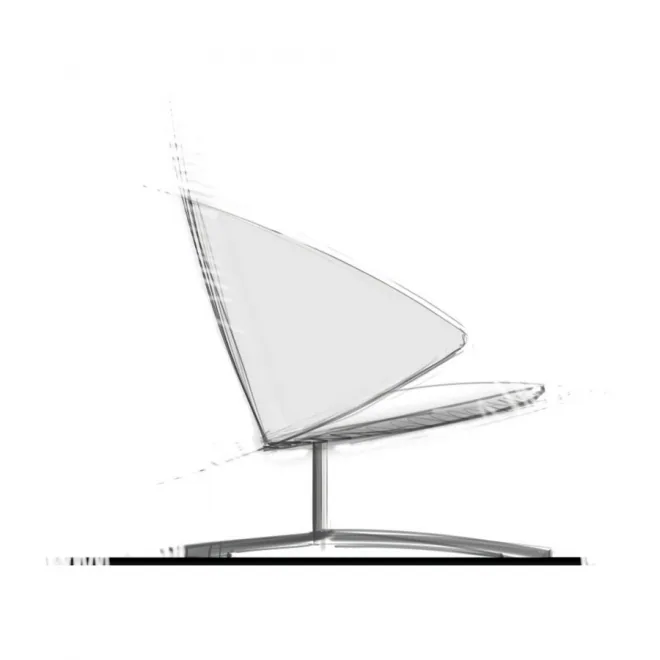
An inclined back may extend well behind the seat, while a thick back cushion can reduce the usable seat depth. Study the side view and distinguish the chair’s furthest point from the edge of its cushion.
If you want a footstool, include it in the arrangement from the beginning. Its footprint, plus the space occupied by outstretched legs, may matter more than the difference between two otherwise compact armchairs.
Three places for a small armchair
Beside the sofa
In a living room, the chair should join the conversation without closing the route to a door or balcony. Draw the sofa area first and keep the main route clear. Turning an armchair diagonally may soften the arrangement, but it also changes the footprint on the floor.
A rectangle drawn parallel to the wall does not accurately represent a rotated chair. Try the position using removable tape or a chair of similar overall size. Consider this alongside the sofa’s dimensions, including any projecting chaise or footstool.
In a reading corner
Here, the way you sit matters most. Does the back support your preferred position? Can you rest your arms, and where will the book go when you get up? A particularly enclosed seat may suit a short pause but feel less suitable for a longer reading session, depending on the person.
The reading corner also includes light and a surface for small objects. A large side table can cancel out the advantage of a compact chair. A smaller surface on the useful side may be enough. Our guide to living-room table heights gives further points to compare.
In a bedroom or hallway
In a bedroom, decide whether the chair is for reading, getting dressed or an occasional break. In the hallway, a seat for taking off shoes may be all that is needed, provided it does not obstruct the door. A deep lounging design is not automatically appropriate because it appears in a small-armchair category.
Check that the chair stays out of the wardrobe’s opening area. A lovely seat that must be shifted every morning is likely to become a nuisance rather than a useful addition.
When an armless chair makes sense
Removing the arms can make side access easier and reduce certain parts of the footprint, but it changes the experience of sitting. If you regularly use armrests for support or when standing up, do not remove them solely to gain space.
Consider seat height, ease of movement and how stable the chair feels to its intended user. Comfort cannot be inferred from soft upholstery or a general ergonomic claim. Where possible, the person who will use the armchair should try it.
Swivel and reclining chairs: measure their movement
A swivel base lets you change direction, but the back and arms need room to turn without hitting a wall or nearby furniture. The footprint of the stationary chair does not describe its entire working area.
For a recliner, request the dimensions when fully extended and the clearances specified by the manufacturer. A model that looks compact when upright may need much more depth in its relaxed position.
Also check delivery access. Do not assume that feet, arms or backs can be removed for transport; this depends on the product and should be confirmed before ordering.
A useful shortlist for comparing two chairs
- Overall width, depth and height.
- Usable seat dimensions and seat height from the floor.
- Space needed for turning, reclining or a footstool.
- How easily the intended user can sit down and stand up.
- The position of the lamp, side table and main walking route.
- Care instructions for the selected upholstery.
The better choice may not be the smaller of the two. If a slightly larger chair offers a more suitable seat and fits without interference, those extra centimetres can be well spent. Choose the chair you will actually use, rather than the one that merely fills the remaining corner.
Featured image: Koster armchairs, Desiree. A visually light base does not replace checking the chair’s maximum overall footprint. Photo credits: www.arredaremoderno.com.