

Wall bed (Murphy bed): types, sizes, mechanisms and when it makes sense
A wall bed (also called a Murphy bed) folds back against the wall, inside a unit or a wardrobe, and gives the room back during the day. Here you will find the types, the sizes, the mechanisms, the mattress to choose and the cases where it really makes sense, with particular attention to the double wall bed.
A double wall bed is a bed that tilts up against the wall, vertically or horizontally, and when closed becomes a unit between 33 and 62 cm deep in the models we compared. To use it you need a wall that can carry it and free floor space in front to open it: from about one metre for horizontal models to over two metres for vertical ones.
In short
- There are three main families: vertical (fold-down), horizontal (side-hinged) and bunk; versions with a sofa, a wardrobe or a desk also exist.
- Opening is assisted by gas springs or pistons built into the side of the unit, often with a braking system.
- Closed depth runs from 33 to 62 cm in the models compared; open depth goes from 106 cm (horizontal) to 214-241 cm (vertical).
- Fixing to the wall is mandatory, and the Italian site arredamento.it advises ruling out plasterboard walls.
- It makes sense in a studio flat, a guest room, a holiday home and a child’s room; for daily use the mattress and the wall matter most.
What is a wall bed and how does it work?
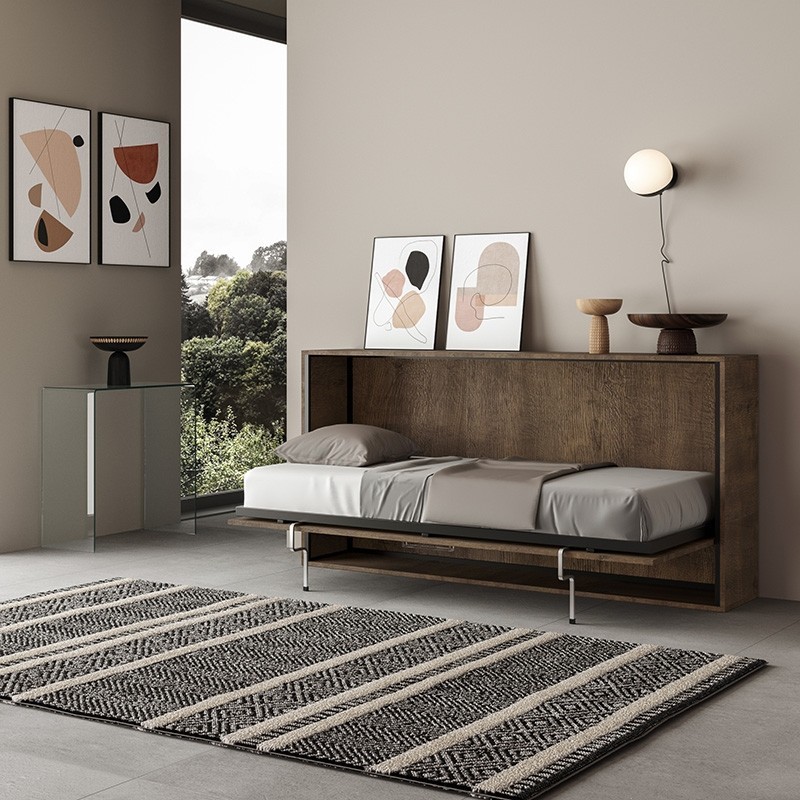
It is a bed that, when not needed, folds away and hides in the wall or in a unit. According to arredamento.it it is the ideal solution for studio and one-bedroom flats, for holiday homes with many beds and for guest rooms.
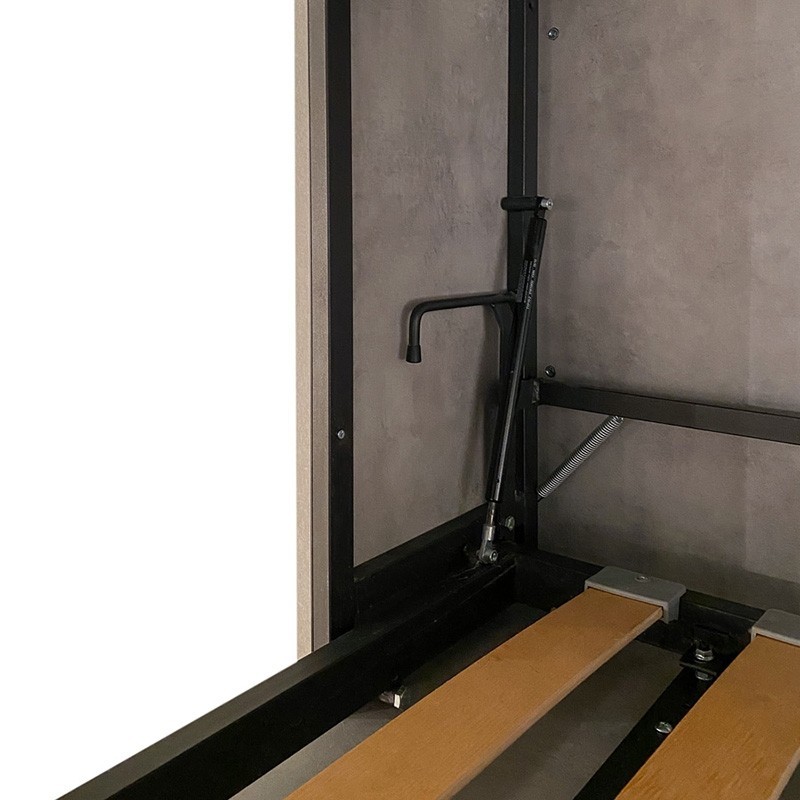
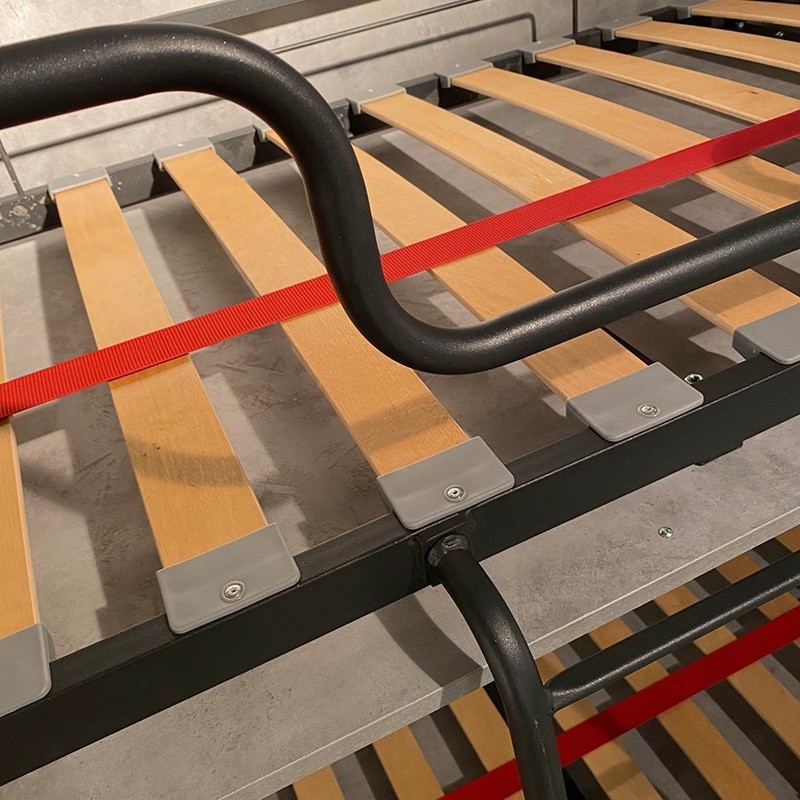
The movement relies on a hinge mechanism with gas springs or pistons, often built into the side of the unit and fitted with a damped system that slows the descent. Some models also offer motorised opening. On safety, manufacturers’ sheets mention anti-closing systems, side release handles and automatic locks against accidental opening and closing.
What types of wall bed are there?
Vertical, fold-down
It is one of the most widely used mechanisms: the bed tilts down from the wall and, when closed, looks like a wardrobe. It is the typical choice for a double. The price to pay is the open depth, which for the vertical models described by arredamento.it reaches 217-228 cm and in another case 214-241 cm (with a closed depth of 35 or 62.3 cm).
Horizontal, side-hinged
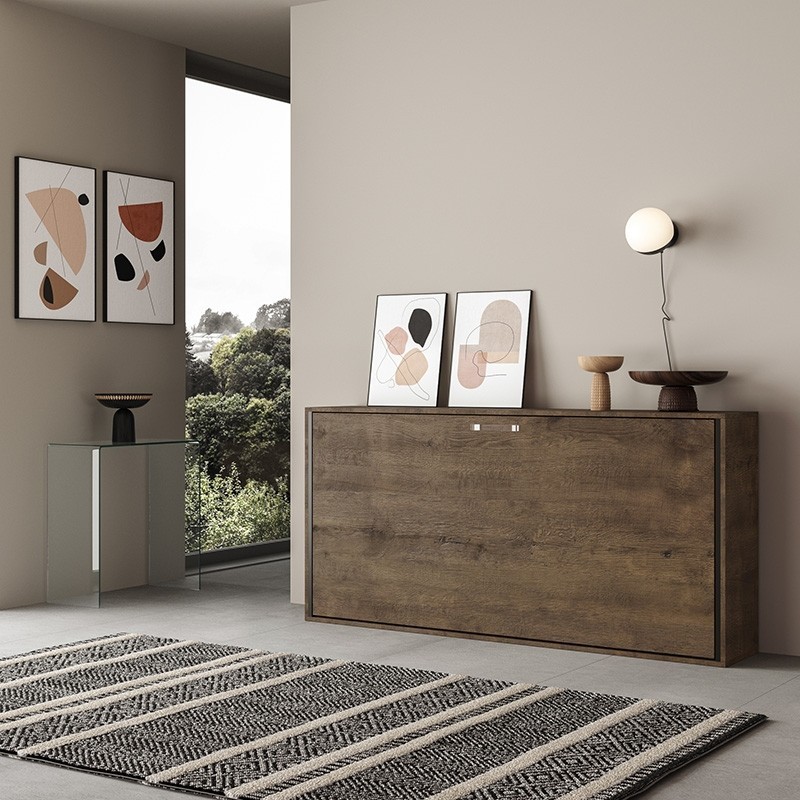
The bed tilts from its long side and, when closed, looks like a low unit. The horizontal layout reduces the height and leaves the space above free for shelves or compartments. The single Kando by Itamoby is 200 cm wide, 39 cm deep and 97 cm high when closed, and 106 cm deep when open.

Bunk
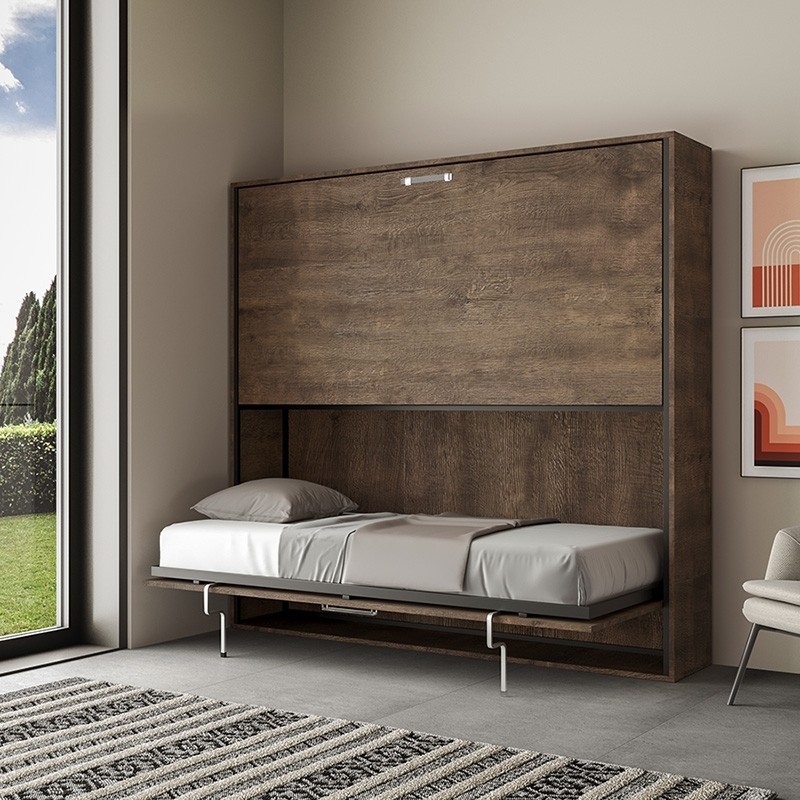
Two single beds, one above the other, in a unit about 40 cm deep: the formula for children’s rooms and guest rooms. The double Kando has two 85×190 cm bed frames and is 191 cm high when closed. Among the models cited by arredamento.it, one has a depth of 36.2 or 42.6 cm and a load capacity of up to 120 kg per bed. To organise a space for two children, start from our space-saving kids’ bedroom guide.

With a sofa, a wardrobe, a desk or a table
These are systems in which the bed shares the unit with other furniture: a vertical double with an integrated two or three-seater sofa, a bed that disappears inside a wardrobe, a desk that turns into a bed, a table that slides under the bed frame when the bed opens. They are useful when the room has to do several jobs, but the layout needs careful measuring because the whole unit takes up more space than the bed alone.
What size is a double wall bed?
The standard double sizes in Italy are 160×190 or 200 cm; the “French” version is smaller, 140×190 or 200 cm. To compare them with a traditional bed, see how big is a double bed, and for other formats there are small double bed sizes and single bed sizes. For wall beds, depth matters most, both closed and open:
| Model | Bed | Depth when closed | Depth when open |
|---|---|---|---|
| Kando single (Itamoby, horizontal) | 85×190 cm frame | 39 cm | 106 cm |
| Kando double (Itamoby, horizontal bunk) | two 85×190 cm frames | 39 cm | 106 cm |
| Vertical double (example from arredamento.it) | 160×190/200 cm or 140×190/200 cm | 33 or 44.6 cm | 217 or 228 cm |
| Gemini bunk bed (Essedue) | two beds, mattress up to 20 cm | 36.2 or 42.6 cm | not stated |
An open bed takes up more than its own length. To understand the real footprint, see how outside dimensions change in how much space a 90×200 bed frame really needs, and remember to leave the side walkways clear too.
Where can you install a wall bed?
You need a solid wall: fixing to the wall is mandatory. Arredamento.it recommends anchoring the bed with suitable metal plugs, after checking that the wall can be drilled and can bear the whole unit, and ruling out plasterboard, which does not give an adequate hold. For a bunk wall bed one product sheet rates assembly as highly difficult and asks for two experienced people: even for a single bed it is worth using a fitter.
As for space, the bed fits in studio flats and small bedrooms if the area in front is kept clear: to plan the room see these ideas for furnishing a small bedroom in a modern style and the layouts for a 9 sqm bedroom.
What mattress does a wall bed need?
The maximum thickness depends on the model and must be read on the product sheet. The Kando takes an 85×185 cm mattress 14 cm high; for a vertical 140×200 one sheet recommends 12-14 cm; the Gemini accepts mattresses up to 20 cm. For sofa beds, arredamento.it recommends 18-21 cm for frequent use: if you sleep on the wall bed every day, choose the model that allows the greater thickness.
How much does a wall bed cost?
The online prices consulted in November 2026 are indicative and should be rechecked. A vertical 140×200 bed on a marketplace starts at around 620 euros; specialist brands start at around 1,300 euros for a bunk wall bed, around 1,700 for a vertical double and around 1,950 for a horizontal double; a horizontal bunk wall bed goes above 3,500 euros. The mattress is usually not included.
Wall bed or sofa bed: when does it make sense?
A wall bed makes sense when the room has to change function every day or when you need a real bed without giving up the living area. A sofa bed is simpler to install and does not need as large an opening area, but arredamento.it points out that sofa beds and folding bed bases are mainly designed for emergencies and not for daily use, as they are less comfortable and practical; with a mattress 18-21 cm high, however, even a sofa bed can serve frequent use.
- Pros of the wall bed: it frees the room during the day, has a real bed base and mattress, and has assisted opening.
- Cons: it needs a suitable wall and demanding assembly, and the space in front must stay clear when it is open.
If you choose a sofa bed, here are some models with the sizes given on the product sheets: the Ghost by Gervasoni comes as an armchair bed (112x96x80 cm, mattress 72×200), a French-style sofa bed (180 cm, mattress 140×200), a double (200 cm, mattress 160×200) and a single with a pull-out drawer (220 cm, mattress 80×200). To see which formulas work, also read about French sofa beds.
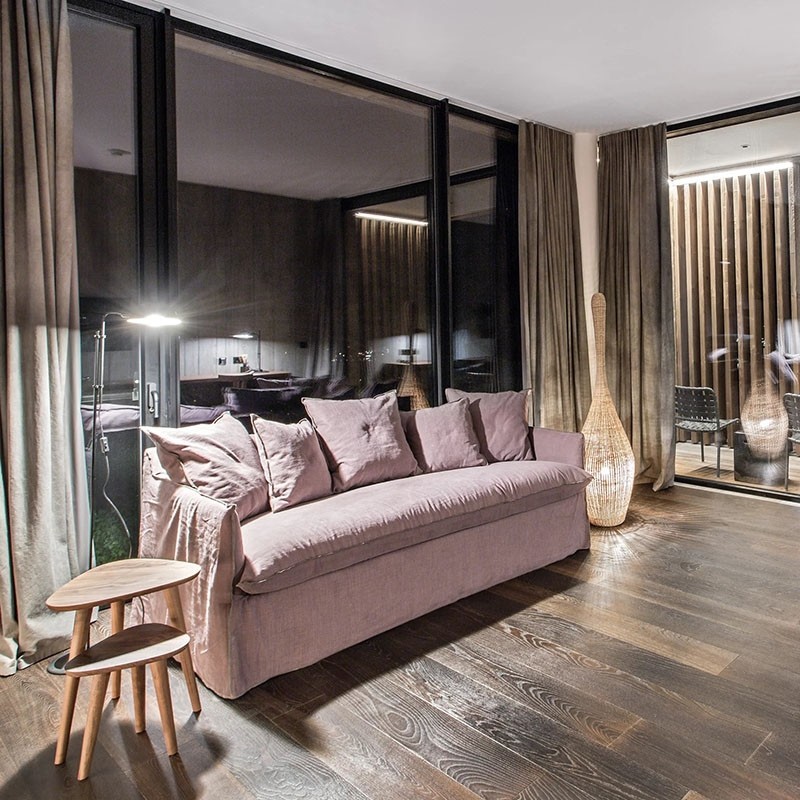
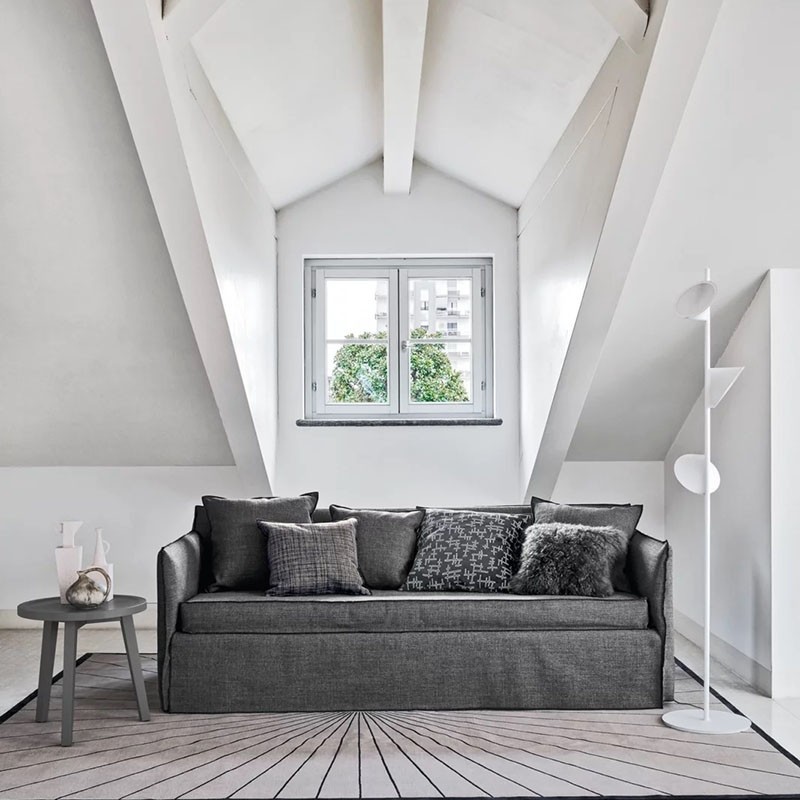
The Kubic by Désirée, in the two-seater composition, is 232 cm wide and 99 cm deep, and the open bed is 230×184 cm; the Every One, in the linear two-seater version, is 168, 188 or 208 cm wide. The Mosley by Felis is available as an armchair bed, a two-seater and a three-seater sofa.
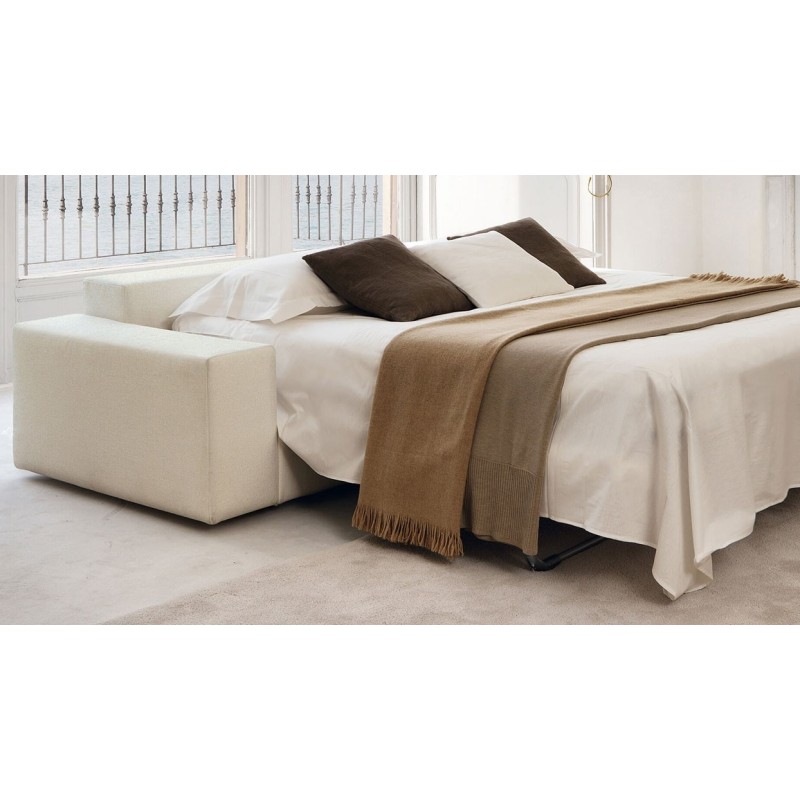

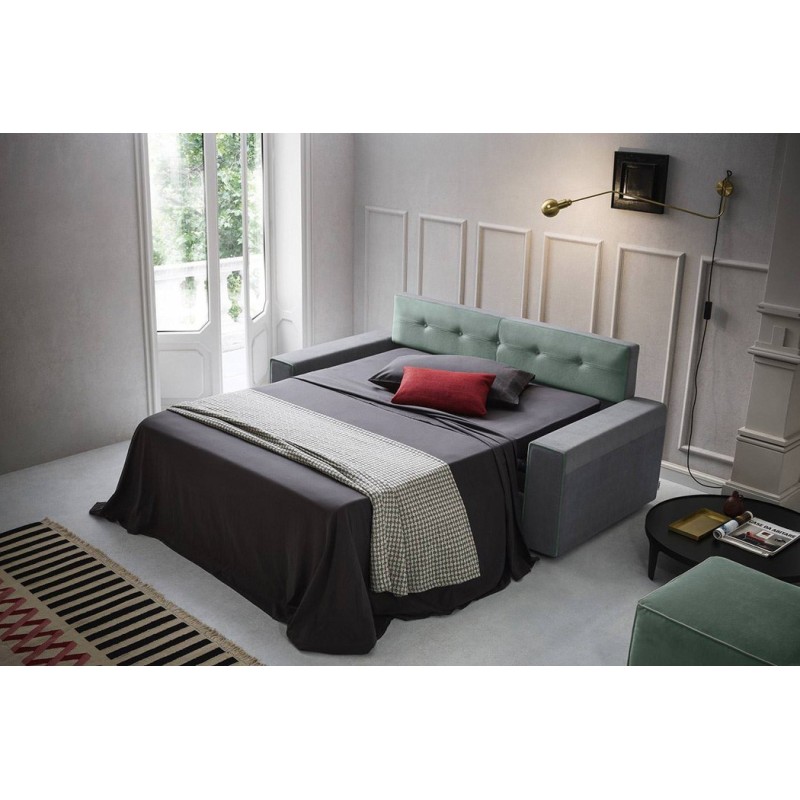
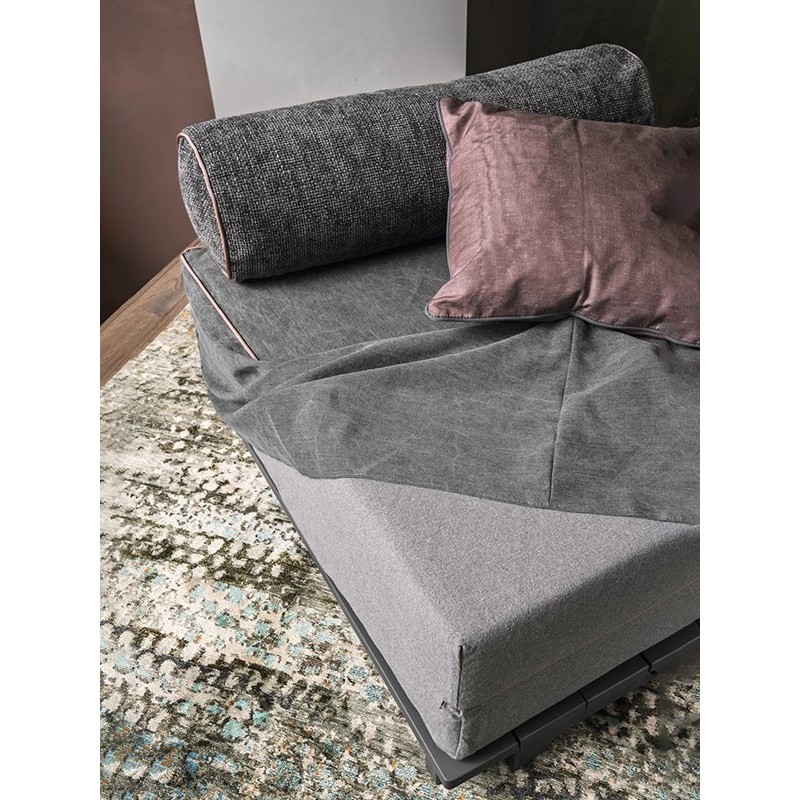
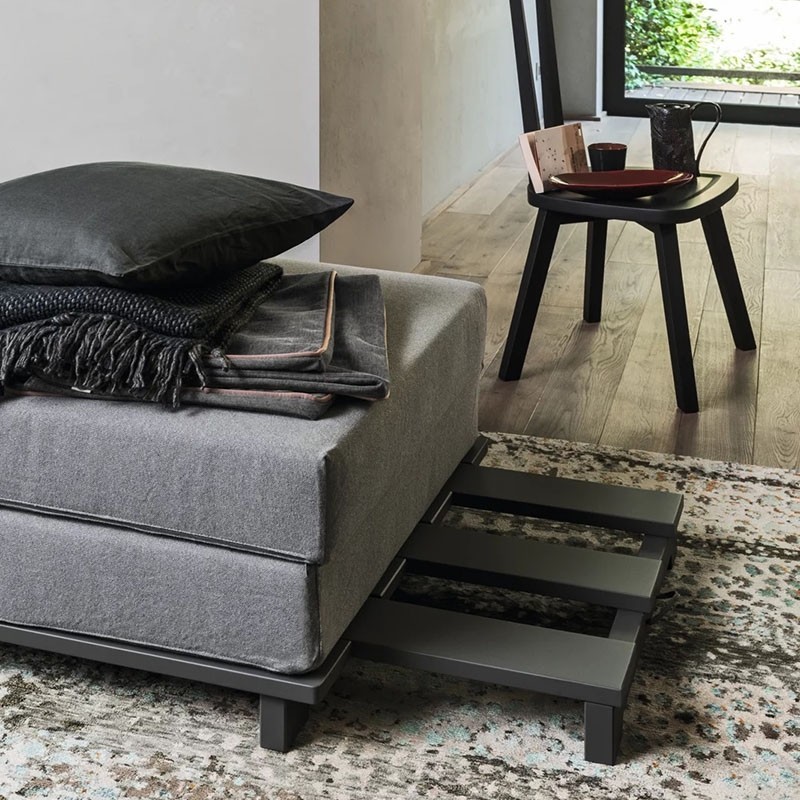
For an occasional extra bed there is also the pouf bed: the Kubo by Gervasoni has a folding 80×200 cm mattress, a wooden frame, fabric upholstery and a bolster cushion included.
Which mistakes should you avoid when choosing a wall bed?
- Fixing the bed to an unsuitable wall, such as plasterboard, without a technician’s opinion.
- Measuring only the closed unit and forgetting the open depth, which can exceed 2 metres.
- Buying the mattress before reading the maximum thickness the model allows.
- Overlooking load capacity: in the bunk beds cited it ranges from 120 to 150 kg per bed.
- Relying on DIY assembly: the product sheets speak of high difficulty.
Frequently asked questions
How much space do you need in front of a wall bed?
It depends on the type: 106 cm of depth for the horizontal Kando, 214-241 cm for the vertical beds described by arredamento.it. Add the walkway to these figures.
Can you sleep on a wall bed every day?
Yes, if the model is chosen well. The Italian site Immobiliare.it recommends the vertical fold-down double for people who live in a studio flat and use it in place of a normal bed; the quality of the mattress and base and the ease of opening matter.
Can you install a wall bed on a plasterboard wall?
Arredamento.it recommends ruling out plasterboard because it does not give an adequate hold. If you have no alternative, ask the manufacturer and a technician which reinforcements are needed.
Before choosing, measure the wall and the space when open, check the maximum mattress thickness and the load capacity, and have the bed fitted by a professional: that way the wall bed stays comfortable and safe every day.