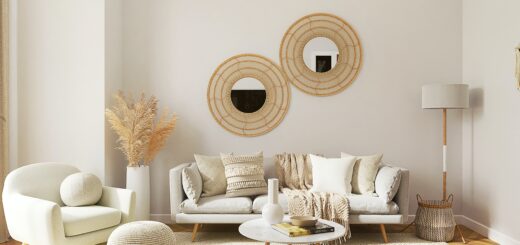


Living room wall colours: how to choose the right shade, with pairings
Light, aspect, feature walls, palettes by style and pairings with flooring and sofa: how to choose living room wall colours you will still like in a few years.
To choose the right living room wall colours, start with the light in the room, then decide how much wall to paint and only at the end pick the shade, testing it on the wall itself. Walls are the largest surface in the room and change its look more than any piece of furniture: the right colour adds character, the wrong one weighs down even a well-furnished living room.
In short
- Light first: in dark rooms stay with light shades, in bright rooms you can use deep, intense colours.
- The feature wall is the one you see as you walk in, or the one behind the sofa, fireplace or TV: painting just one wall is the safest way to begin.
- Warm neutrals, greens, blues and terracotta are the easiest families to pair with wood, fabrics and light or dark floors.
- Pantone chose a white, Cloud Dancer, as its colour for 2026; Sikkens has named a sage green, Soulful Sage, for 2027.
- Test a sample on the wall and look at it in morning and evening light before you paint.
How do you choose a living room wall colour for the light you have?
A living room wall colour is chosen first of all for the amount of daylight. If the room is very bright you can use darker, more intense shades without making it gloomy; if it is rather dark, lighter tones keep it from feeling oppressive.
The aspect matters too. A room that gets direct sun for much of the day handles deep greens, blues and terracotta well; a room with cooler, even light makes warm tones look balanced and can make cool greys look flat. That is why the same colour often looks different in the shop and at home.
Which wall should you paint in a living room?
Paint the wall that creates a focal point: the one you see as you enter, or the one behind the sofa, fireplace or television. This is the contrast wall technique: one wall in a different shade from the others creates a dynamic effect and adds depth, for example a blue or forest green wall with the rest in white or beige.

A feature wall can talk to the furniture: if it is intense, pieces in dark wood or in similar tones create continuity. The shades must still sit well together to avoid a jarring effect. A common question is whether to leave a white margin along the ceiling and adjoining walls: taking the colour right into the corners looks more contemporary, while a narrow white band under the ceiling helps when the ceiling is low or the wall lines are not perfectly straight.
Which colours suit a modern living room?
For a modern living room the four easiest colour families are warm neutrals, greens, blues and terracotta. Each has its own character and its own way of working with wood, fabrics and floors.
| Family | Effect | Where it works | Pairings |
|---|---|---|---|
| Warm neutrals (beige, taupe, greige) | calm, versatile backdrop | all walls, any aspect | wood, linen, warm metals |
| Greens (sage, olive, forest) | restful, close to nature | feature wall or whole room | light wood, terracotta, warm white |
| Blues (powder, navy, petrol) | elegant, adds depth | bright rooms, wall behind the sofa | light grey, brass, dark wood |
| Terracotta and pinks | warm, welcoming | rooms with cool light, reading corners | cream, sage green, rattan |
Neutral walls remain the most popular choice: versatile, timeless and a good backdrop for design furniture and accessories. For two much-requested neutrals, see our guides to the colour taupe and greige. Industry trend picks point the same way: the Pantone Color of the Year 2026 is Cloud Dancer (PANTONE 11-4201), an airy white.

For more personality there are bold colours such as navy, red, dark green or purple, which bring energy and elegance but are harder to pair: furniture and accessories need to be chosen with care so the whole stays balanced. Among greens, Sikkens has named Soulful Sage (J0.10.60) as its Colour of the Year 2027, a soft green inspired by nature.
How do you match wall colour to the floor and sofa?
Start from the things you will not change: floor, sofa and large furniture. Warm wooden floors or terracotta tiles go well with greens, powder blue and warm neutrals; grey or cool floors work with blues, warm whites and terracotta, which warm the scheme up. If your furniture is dark wood, our guide to the colours that go best with brown furniture lists the most successful combinations.
For the sofa there is a simple rule: either the same tone as the wall, lighter or darker, or a clear contrast. A white sofa against a terracotta or blue wall makes an elegant contrast; a grey sofa against a light grey wall builds a soft, tone-on-tone room.
How do you create tone-on-tone walls?
Tone-on-tone walls use the same colour in different strengths, on one wall or on adjoining walls. You can paint one wall lighter than the others, or use a pastel over most of the wall and a deeper shade on a smaller section such as a low band or an alcove: the result has depth without strong contrast.

The technique suits neutrals and pastels and creates a harmonious room. Wallpaper is an alternative when you want pattern: geometric designs for a modern touch, floral or natural motifs for a fresher feel, wood or stone effects for warmth.
Matt or satin: which finish should you choose?
In a living room matt is the most common finish because it absorbs light, gives a rich colour and hides small wall imperfections better. Satin finishes reflect a little more and are easier to wipe, which helps in high-traffic spots such as behind a dining table or along a hallway. Before buying, read the product data sheet: it gives coverage, washability and recoat times.

Then comes the sample test: paint a patch of the chosen colour on the wall, let it dry and look at it in morning and afternoon light and under lamps in the evening. It is the only way to see how it will really look in your room. When choosing colours for textiles and accessories, one reference is the Arredare Moderno catalogue.
Frequently asked questions
What colour should you paint a small living room?
Light, warm colours on every wall work well in a small living room, or a single feature wall at the far end, which adds depth without closing in the space.
Can you paint the ceiling too?
Yes: a ceiling in the wall colour, or a lighter version of it, feels enveloping; with low ceilings it is better to stay with white or a very pale tone.
Where to start
Watch the light in your living room for a few days, choose the wall to highlight and a colour family that works with floor and sofa. Then try two or three samples on the wall. For ideas on furnishing the whole room, read our tips for furnishing a modern living room.